Battersea, Palmerston Court
Typology:
Student accomodation
Date completed:
2024
Area (m²):
26,000
Location:
Battersea, London
Introduction:
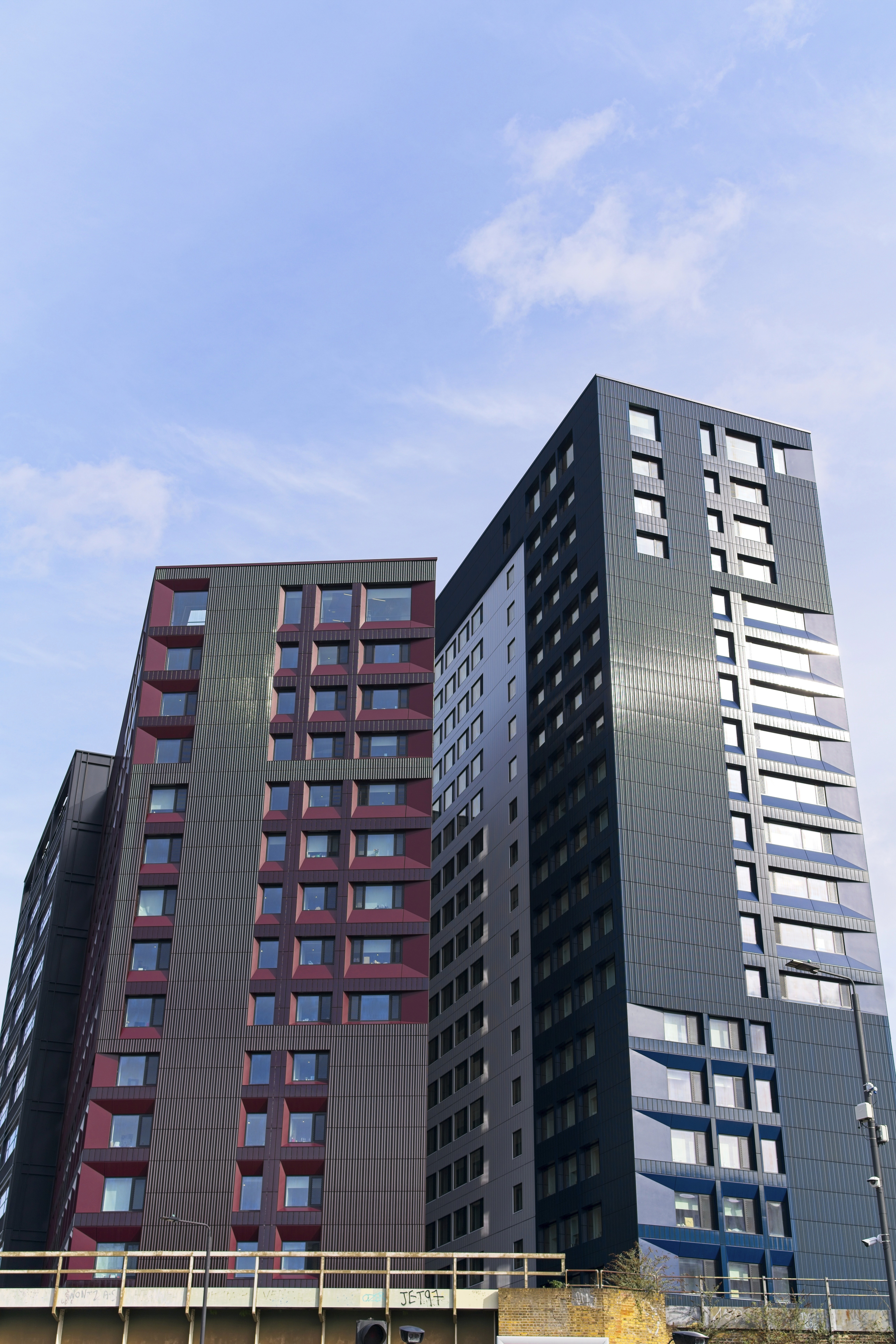
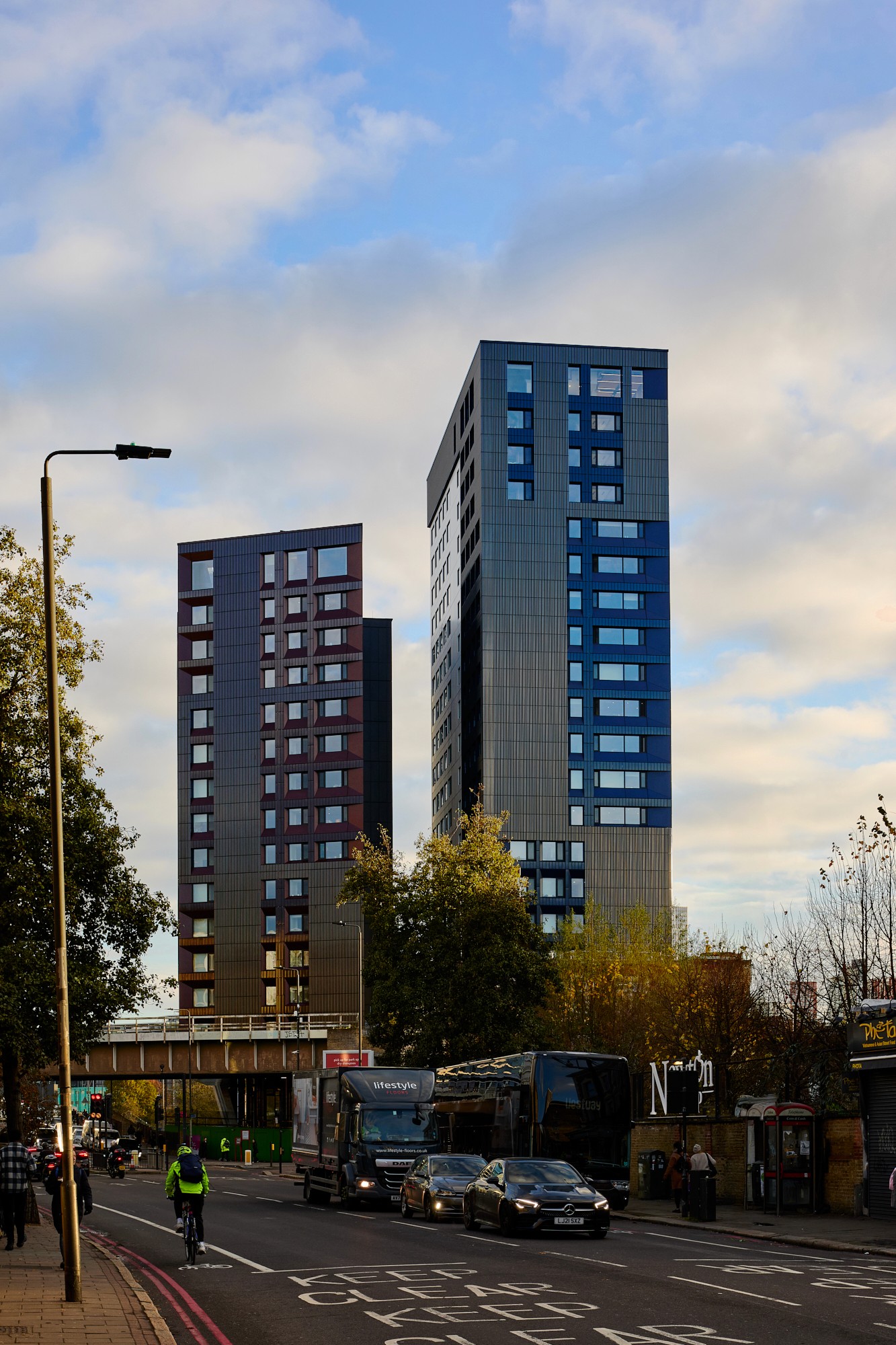
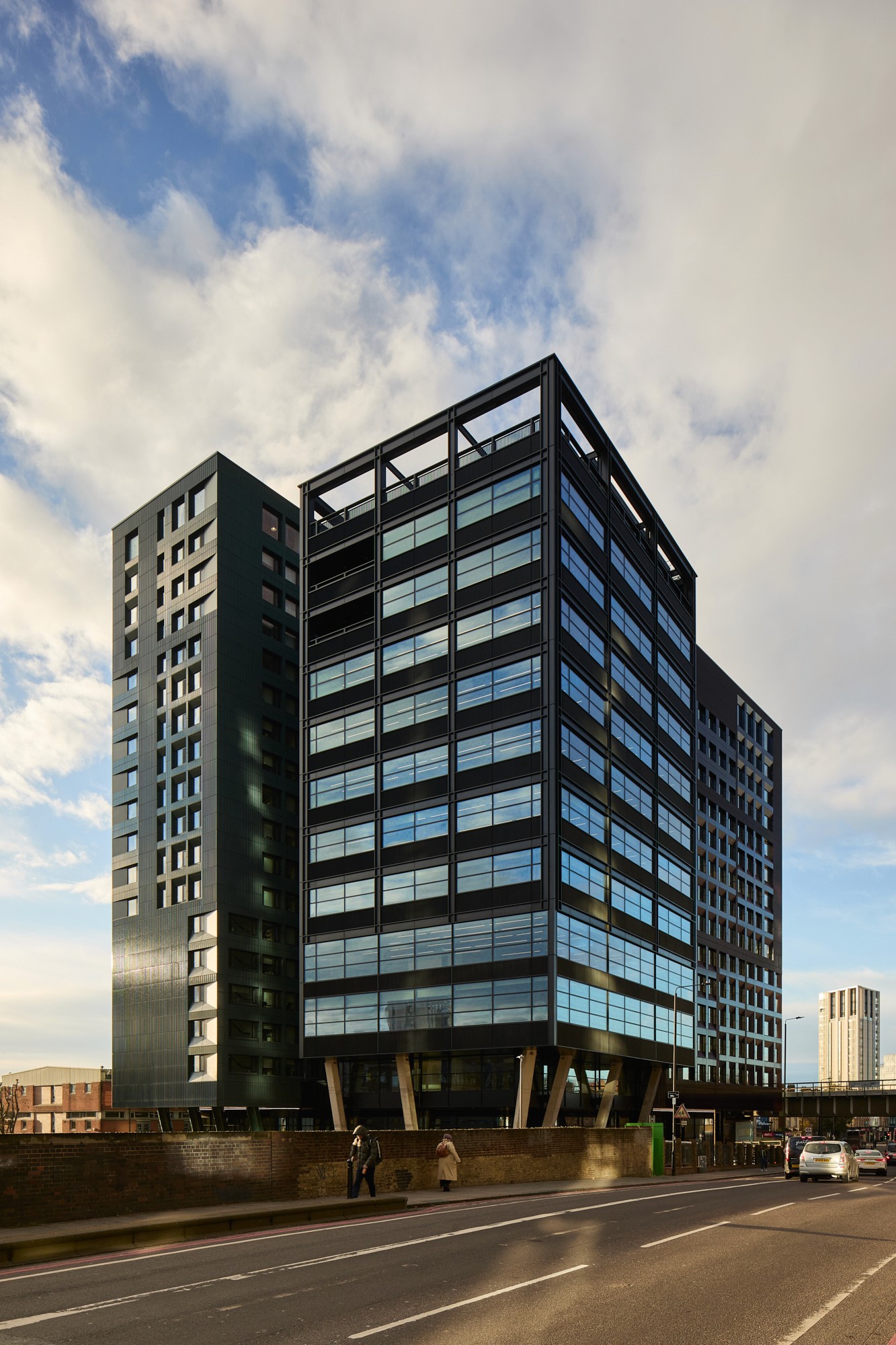
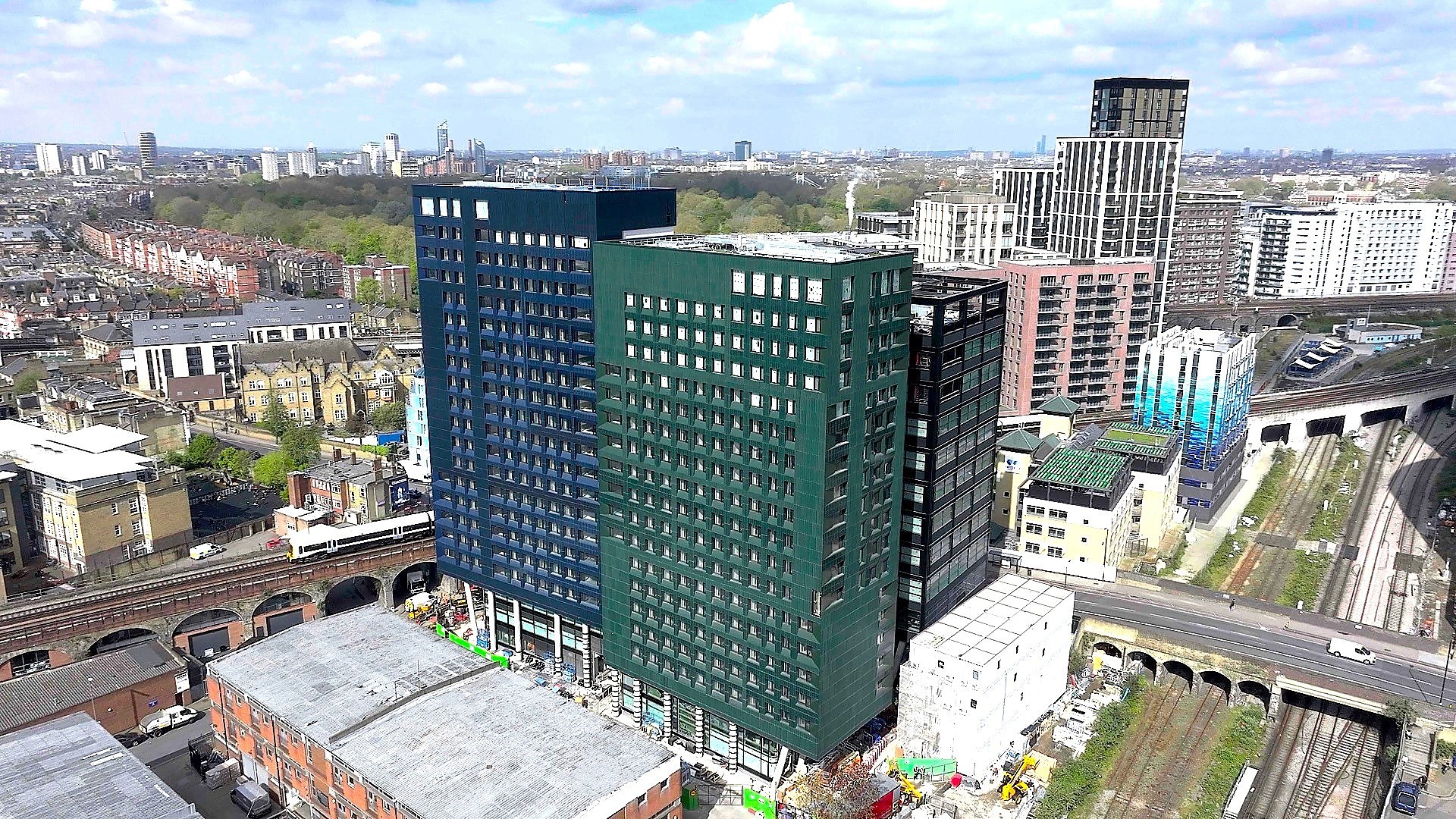
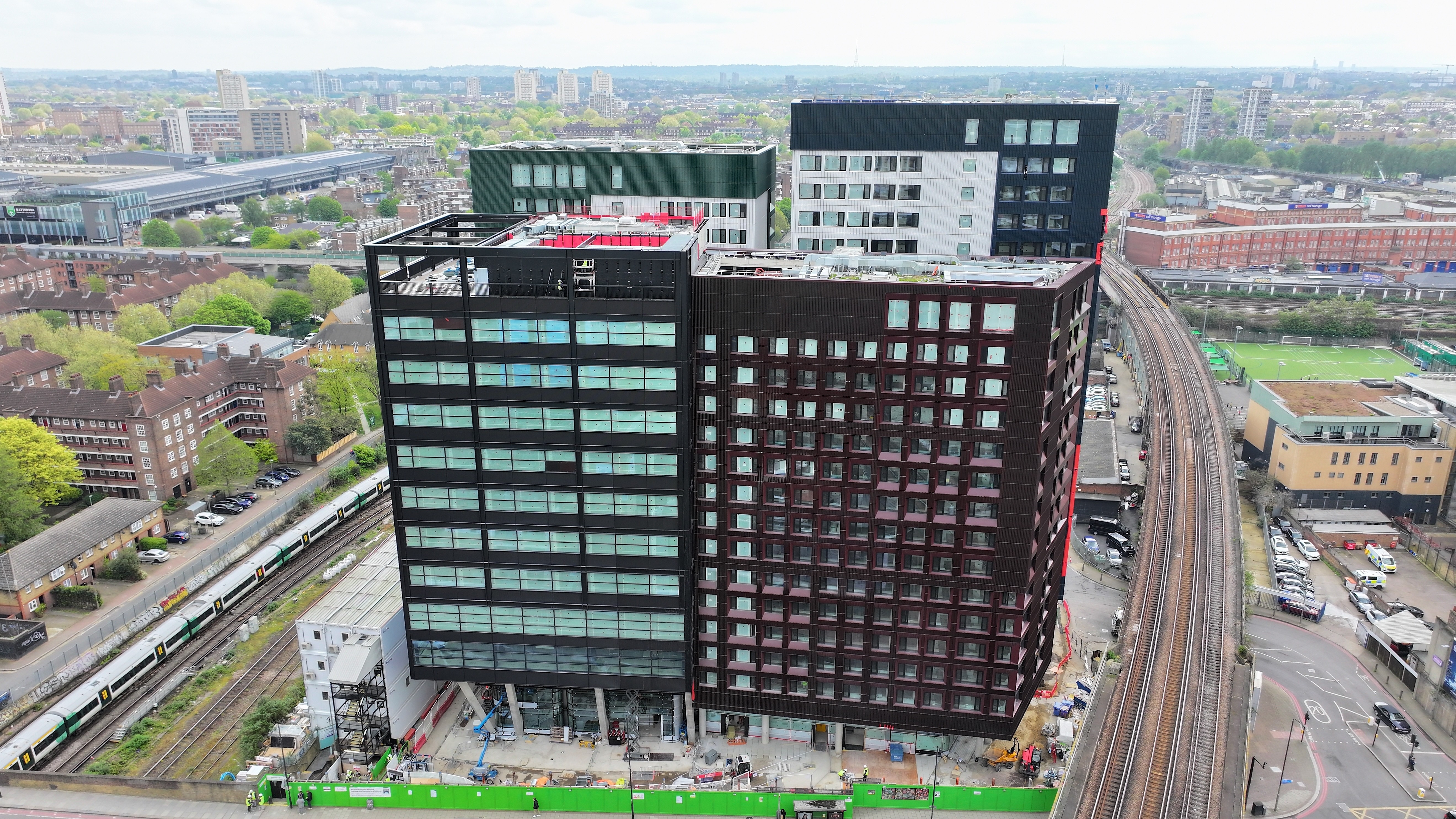
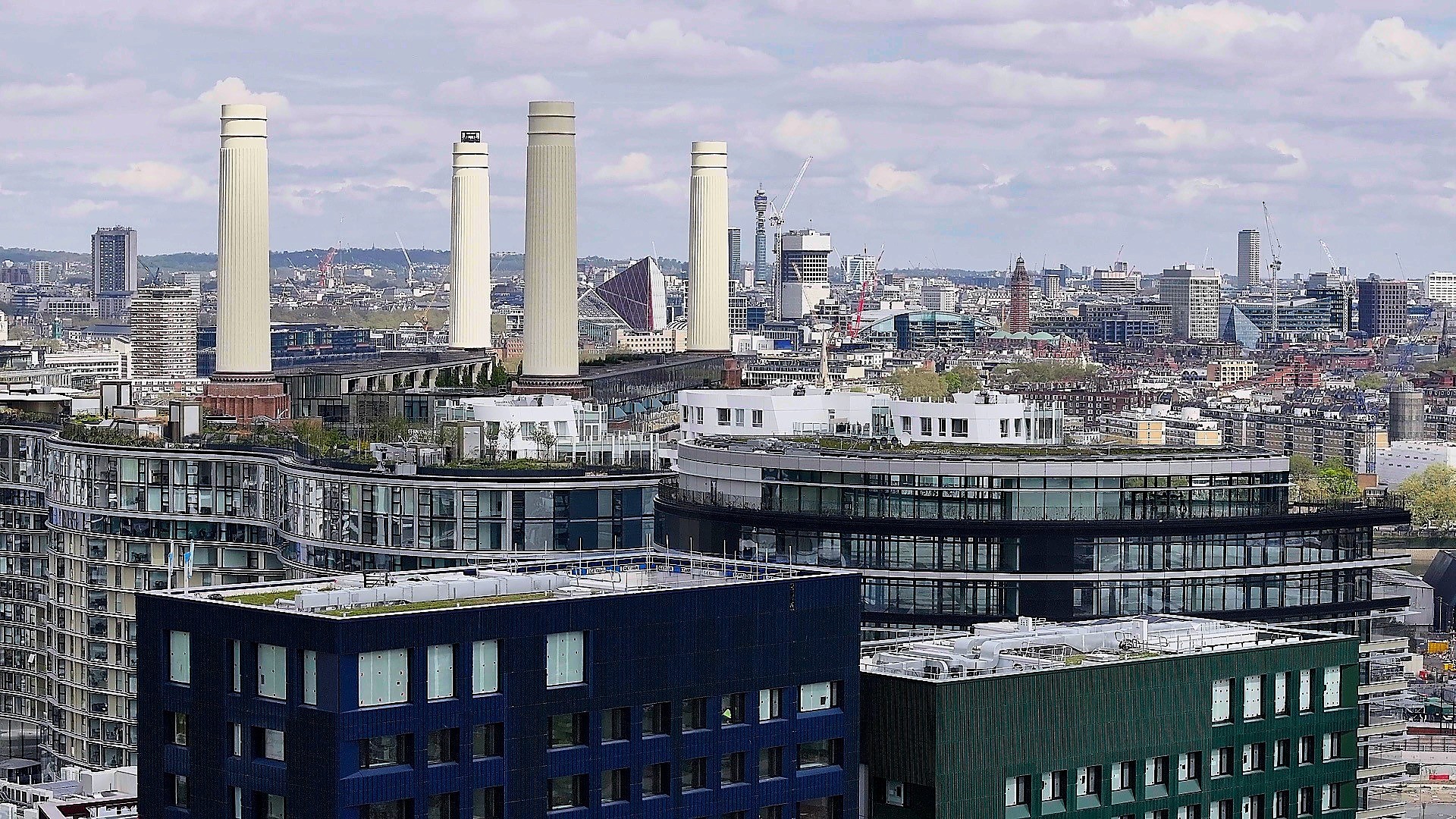
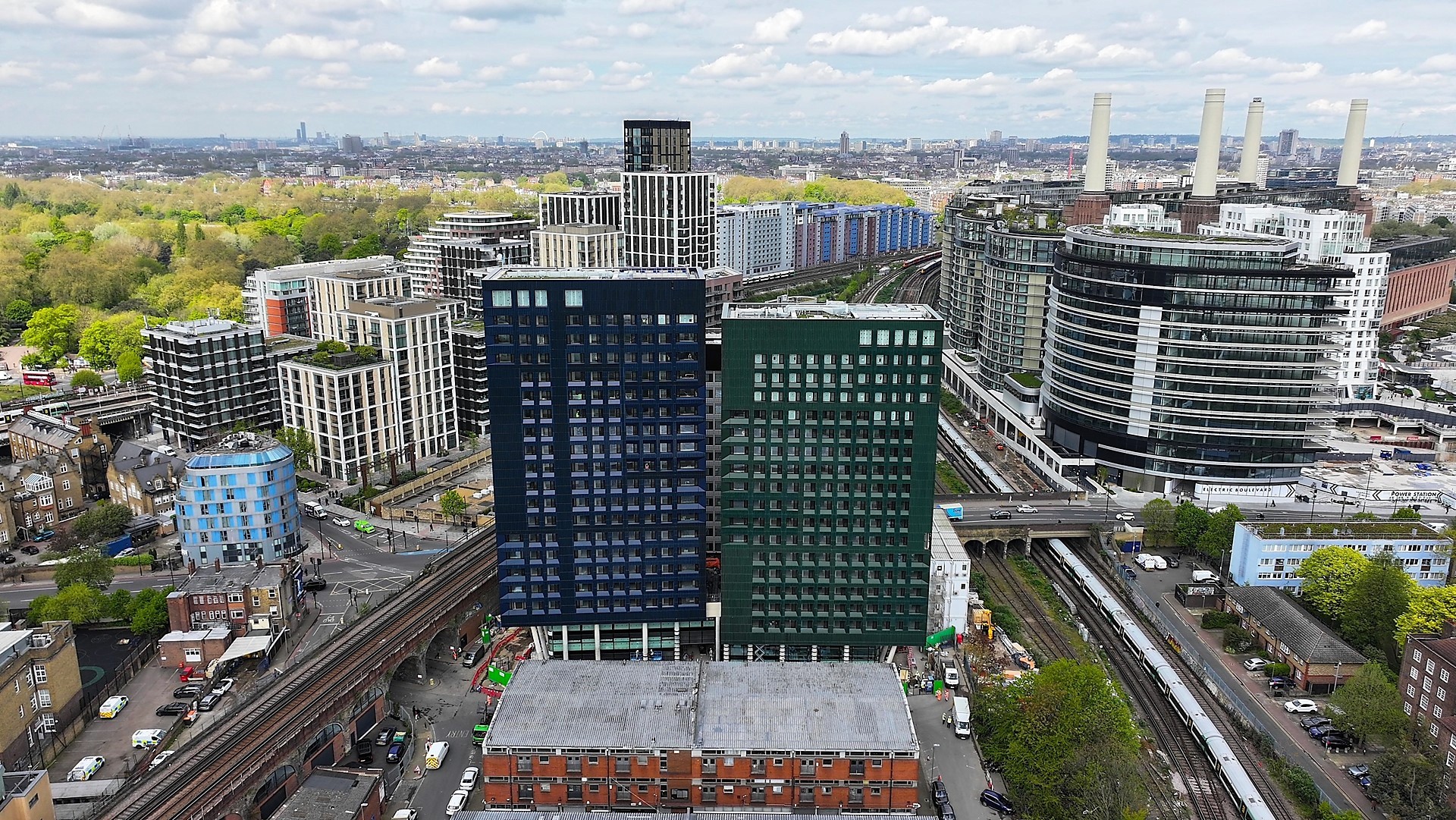
Located near Battersea Power Station, the four-block development provides energy-efficient housing for 852 students. It is also Europe’s largest Passivhaus student residence and the third largest globally, following UTSC in Canada and Cornell Tower in New York at the time of writing.
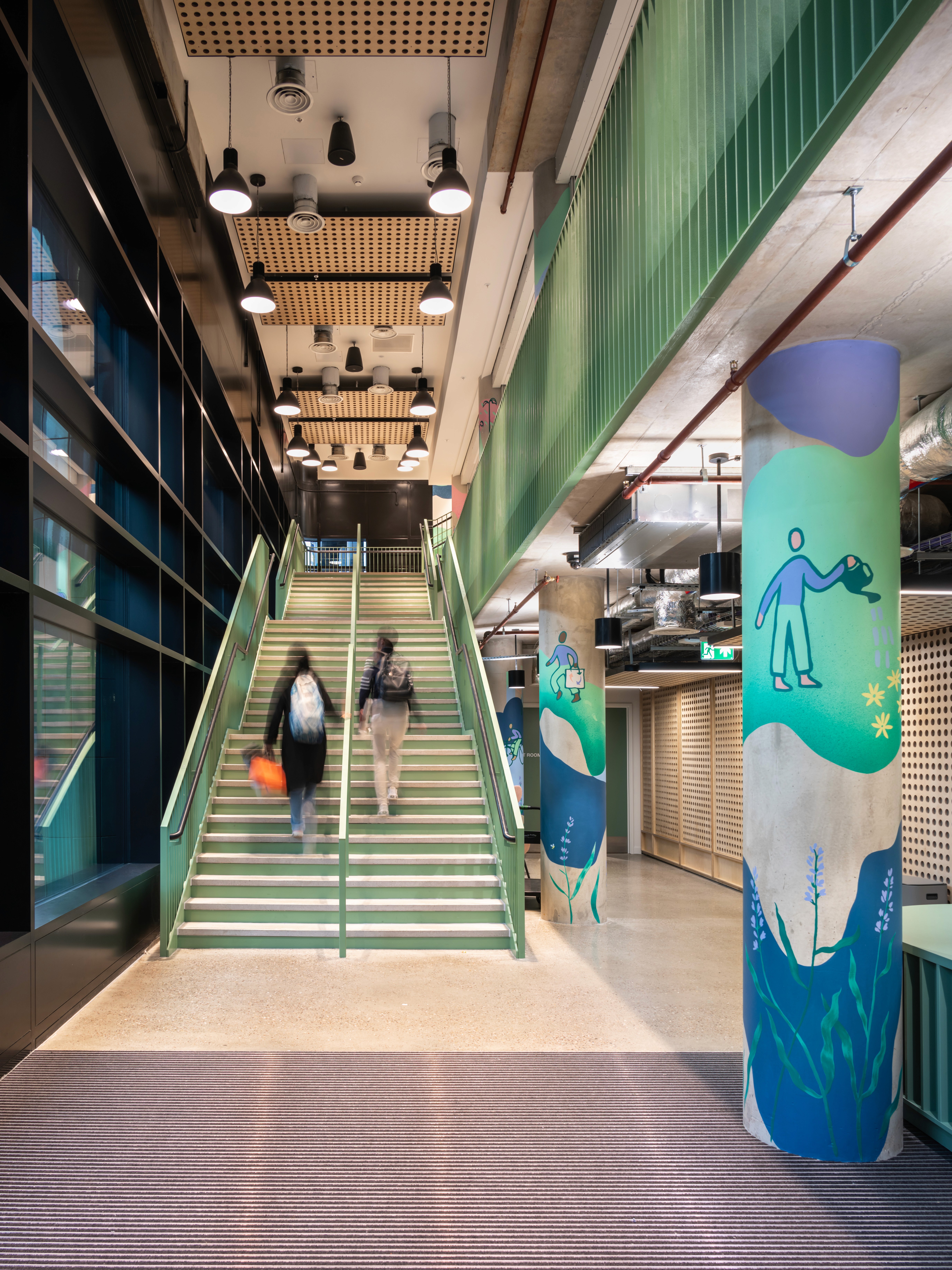
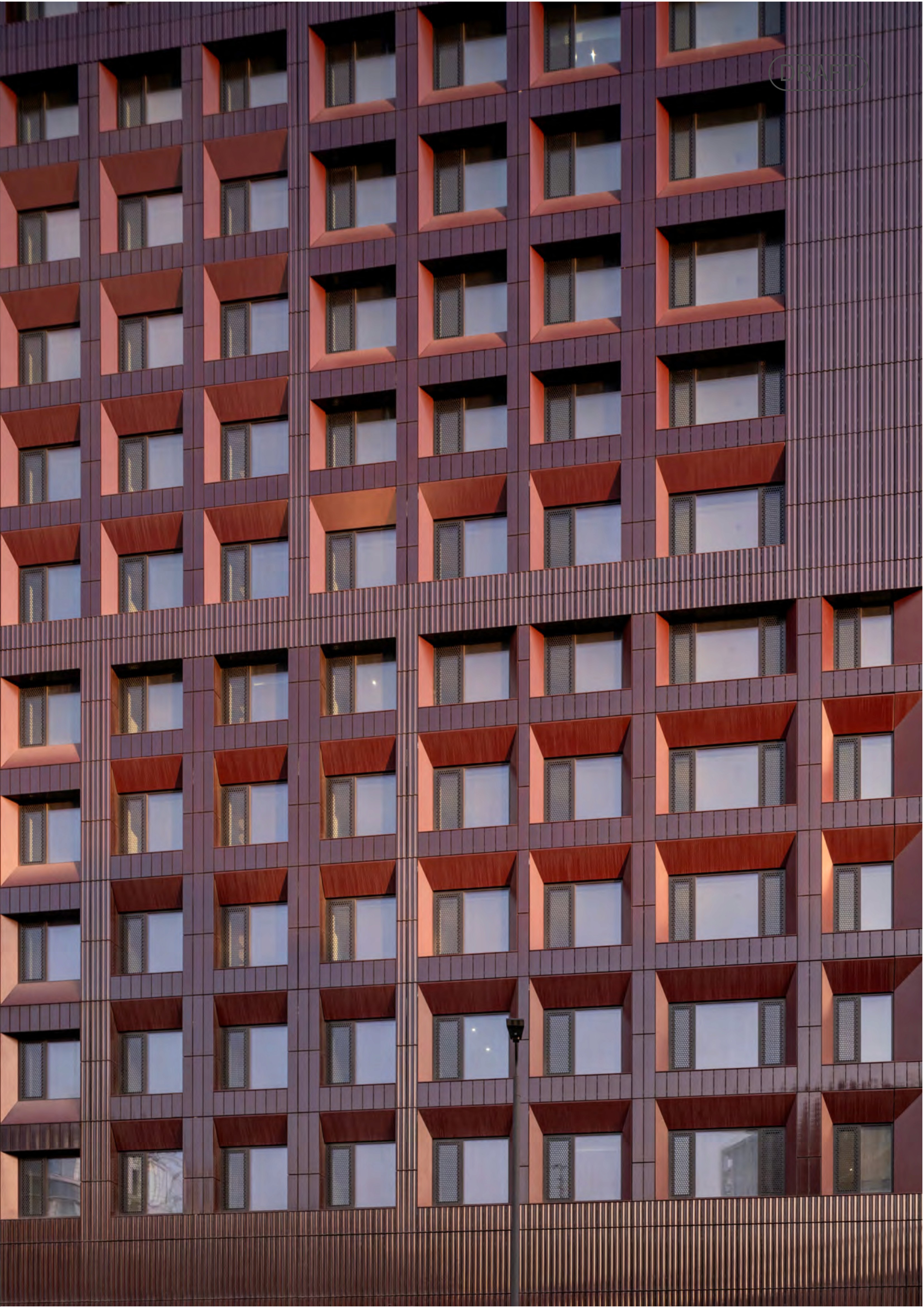
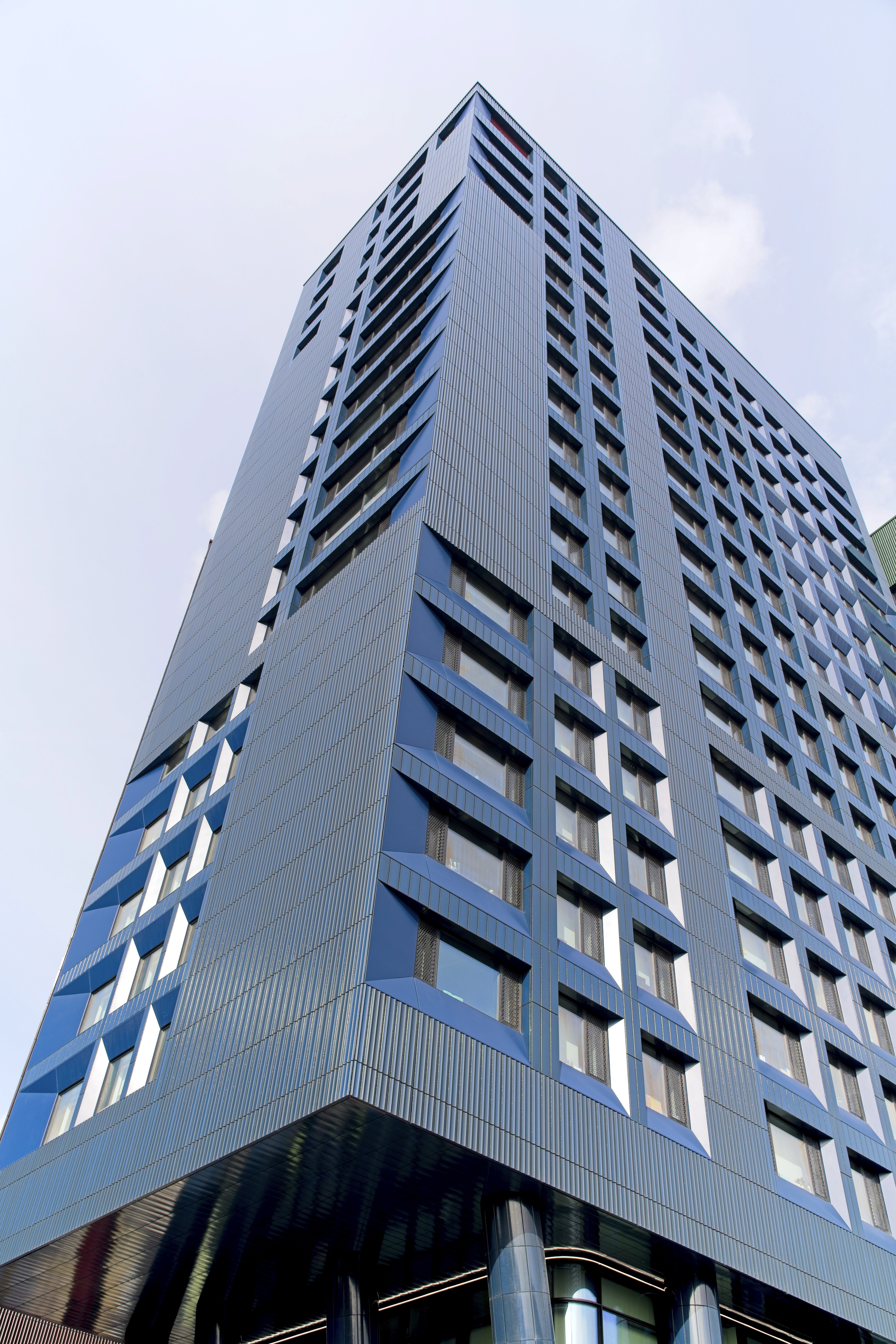
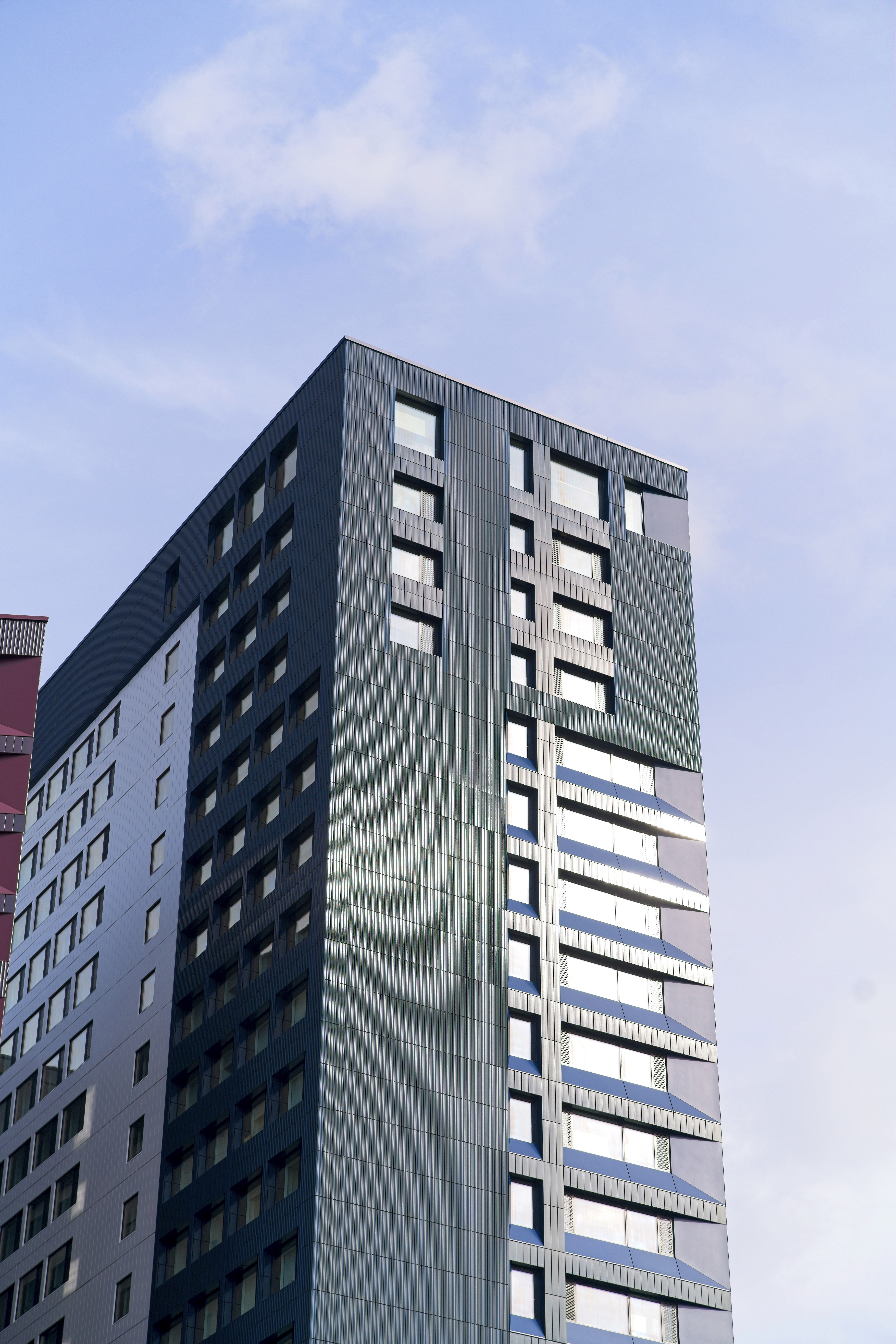
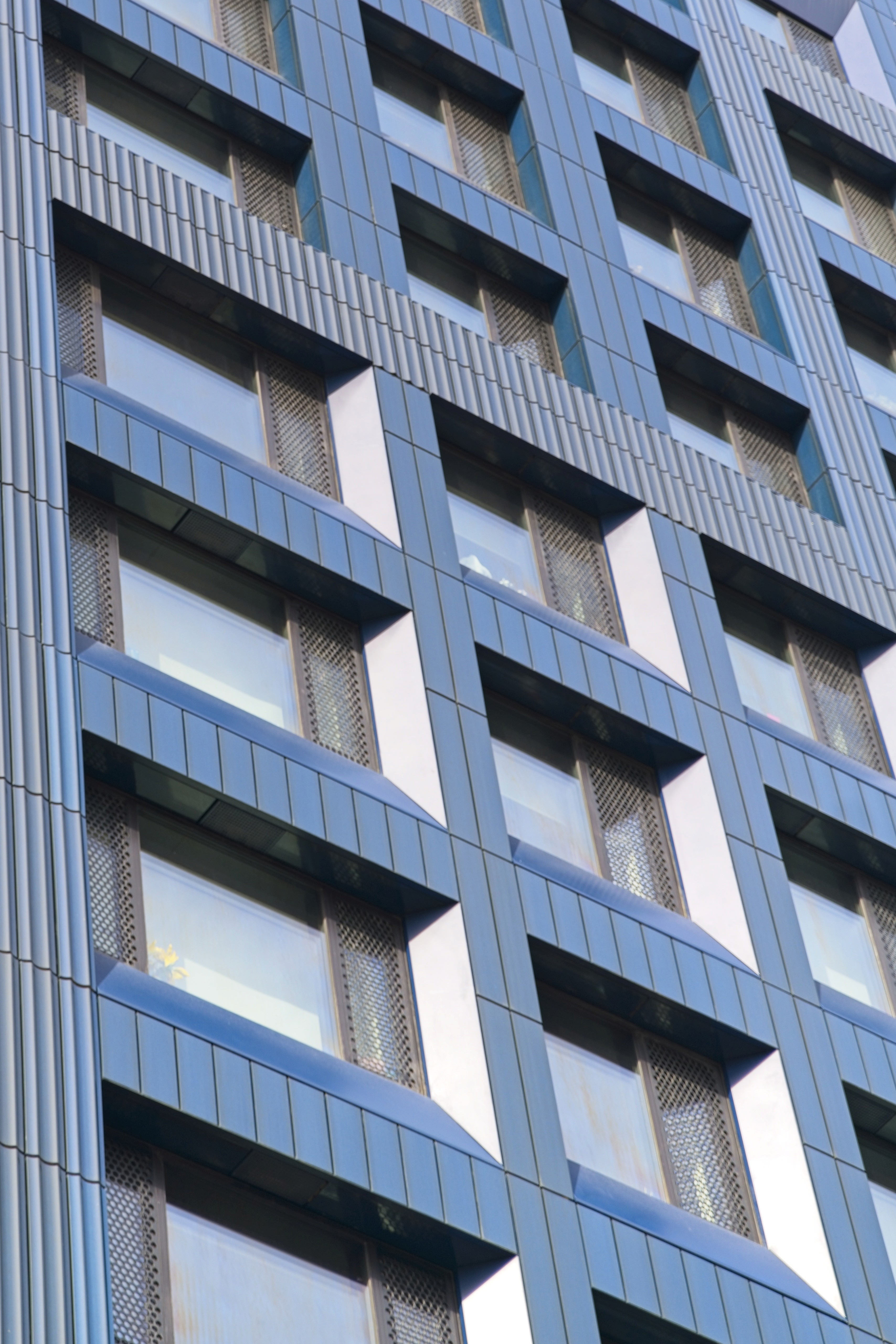
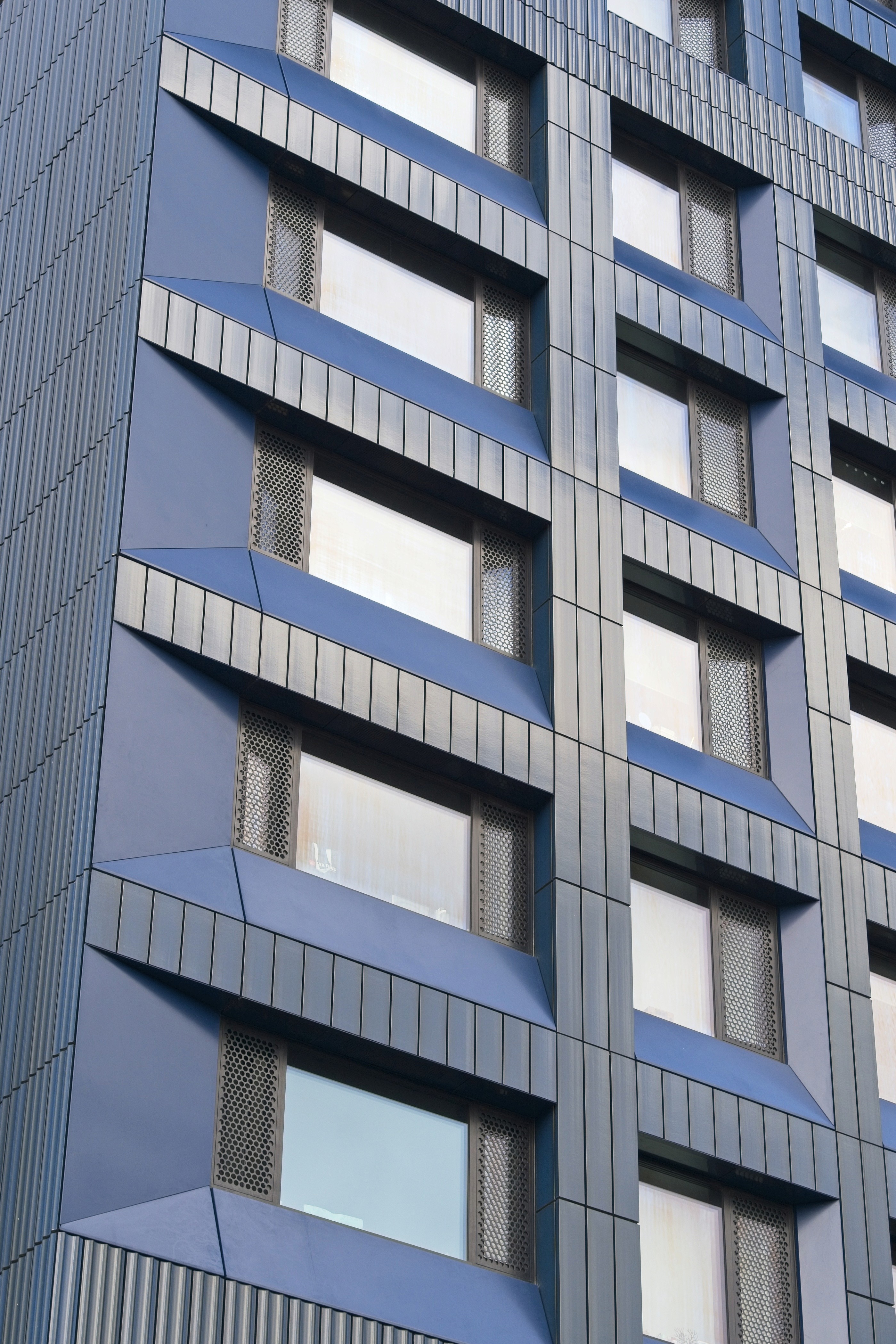
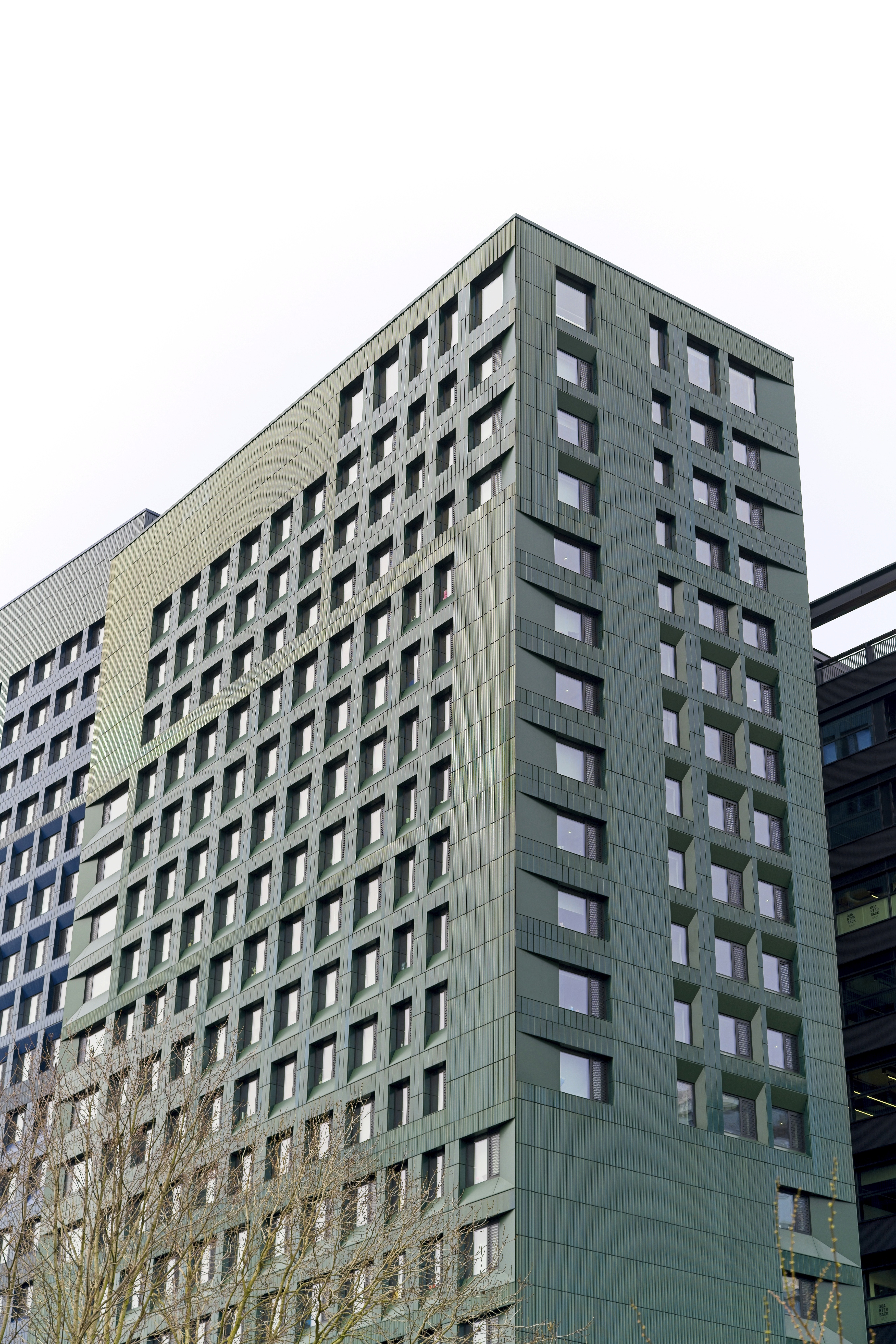
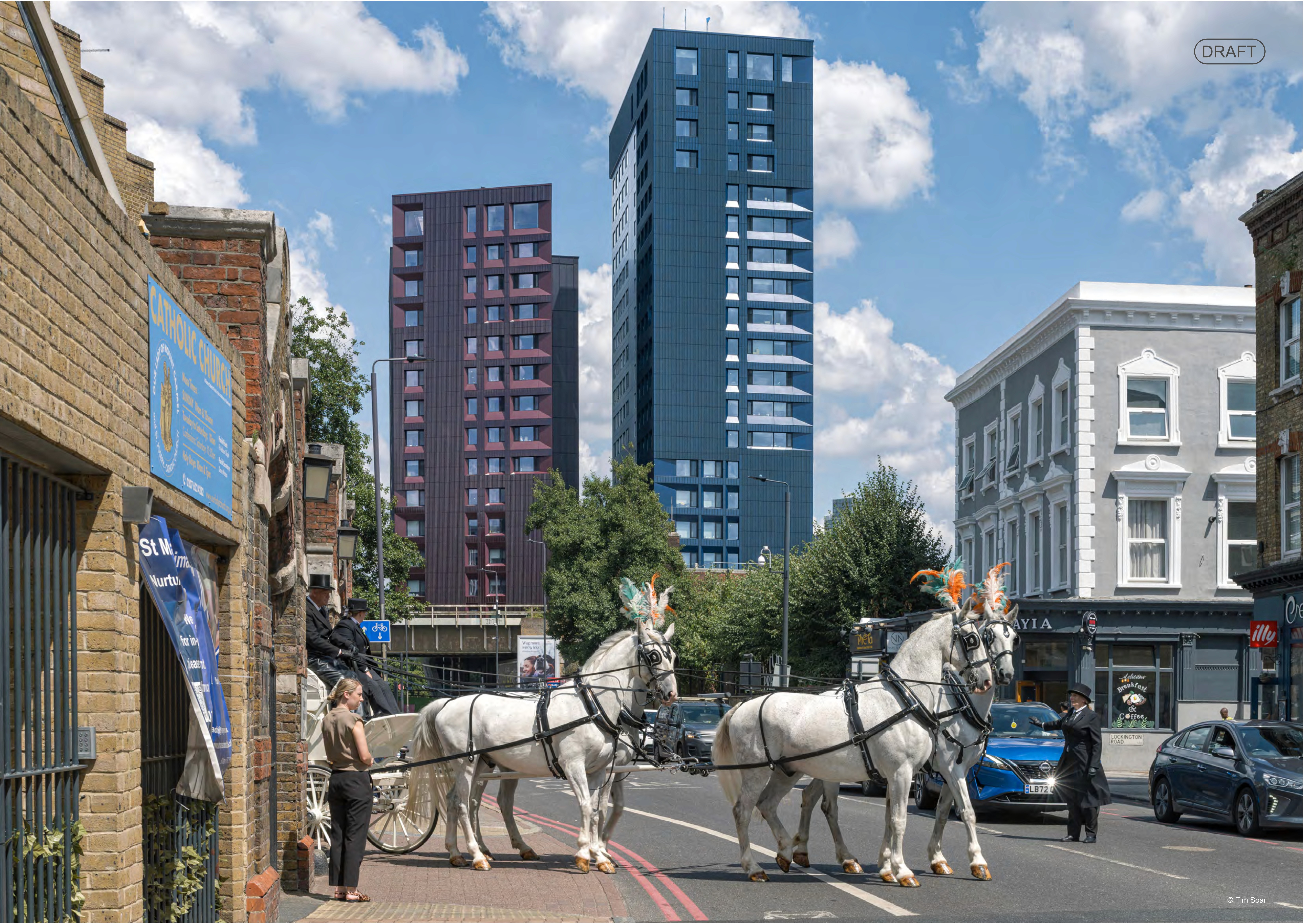
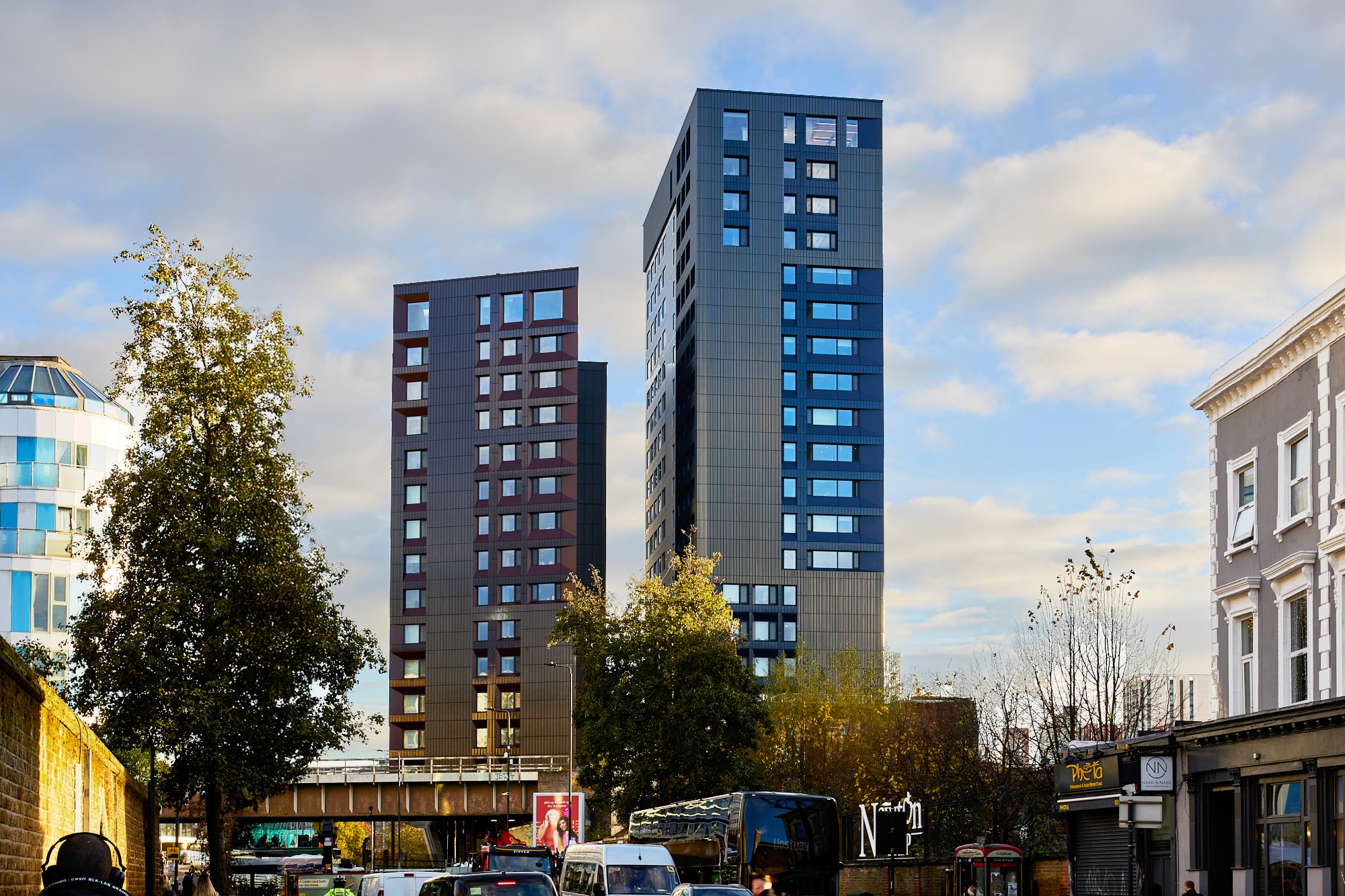
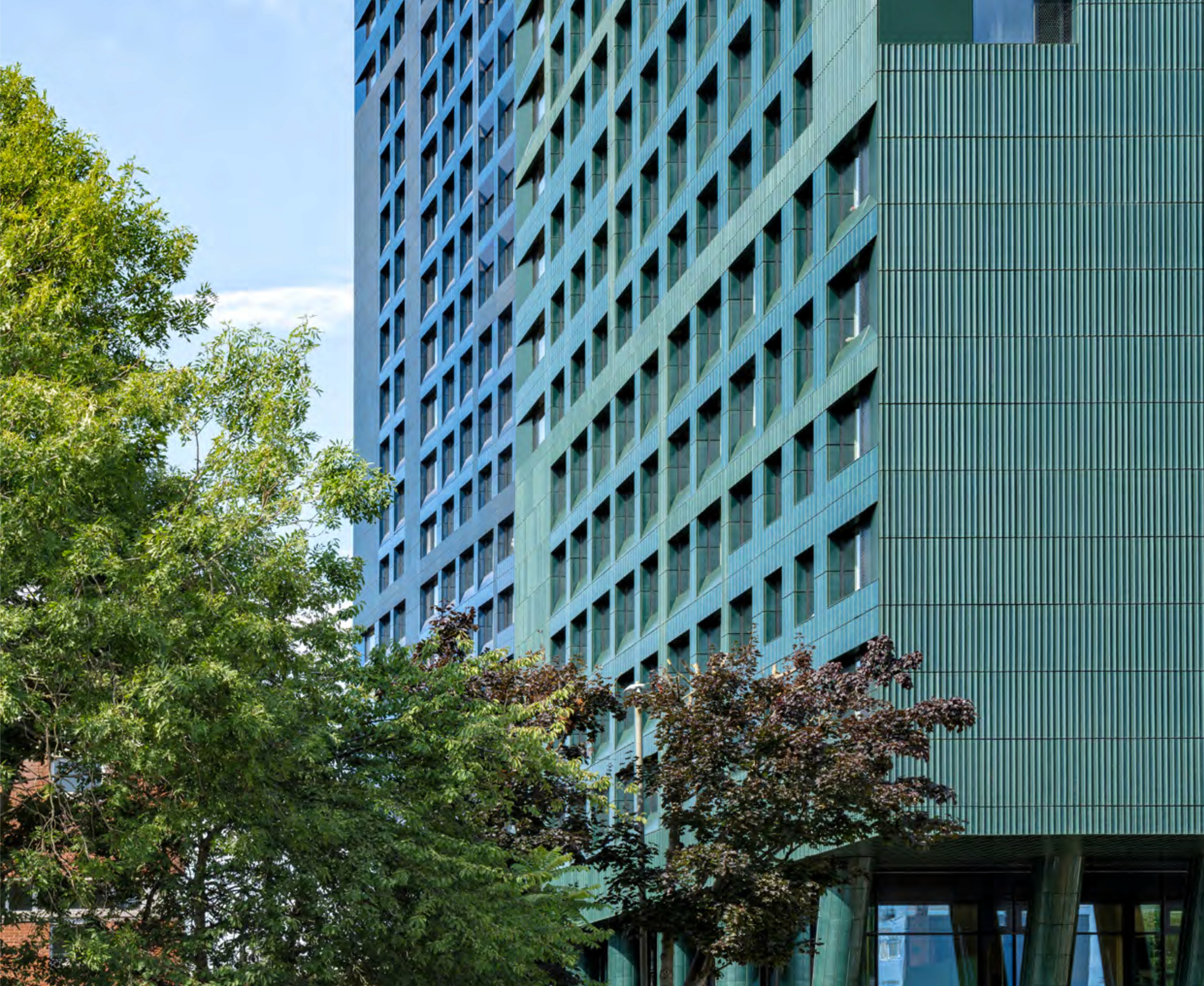
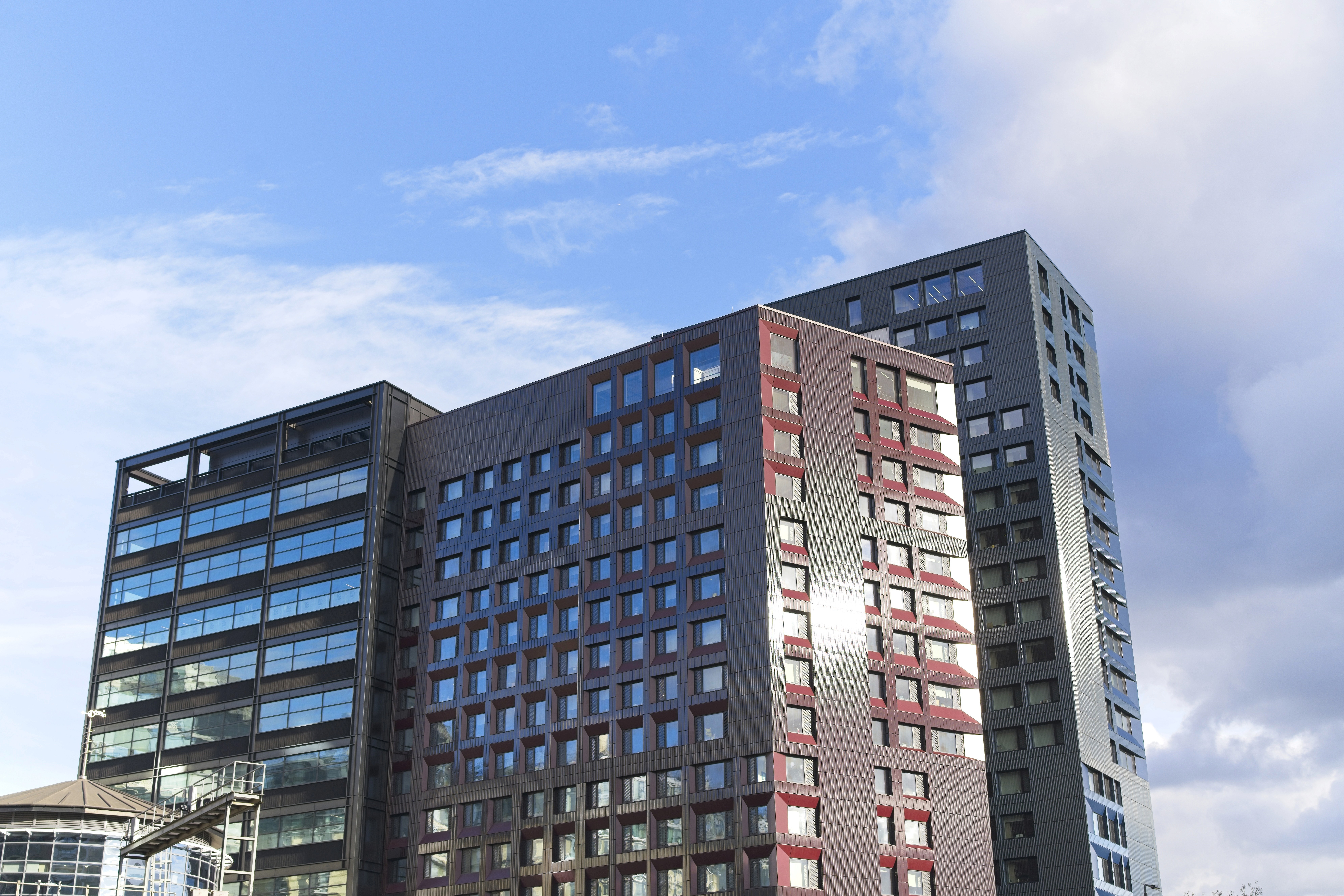

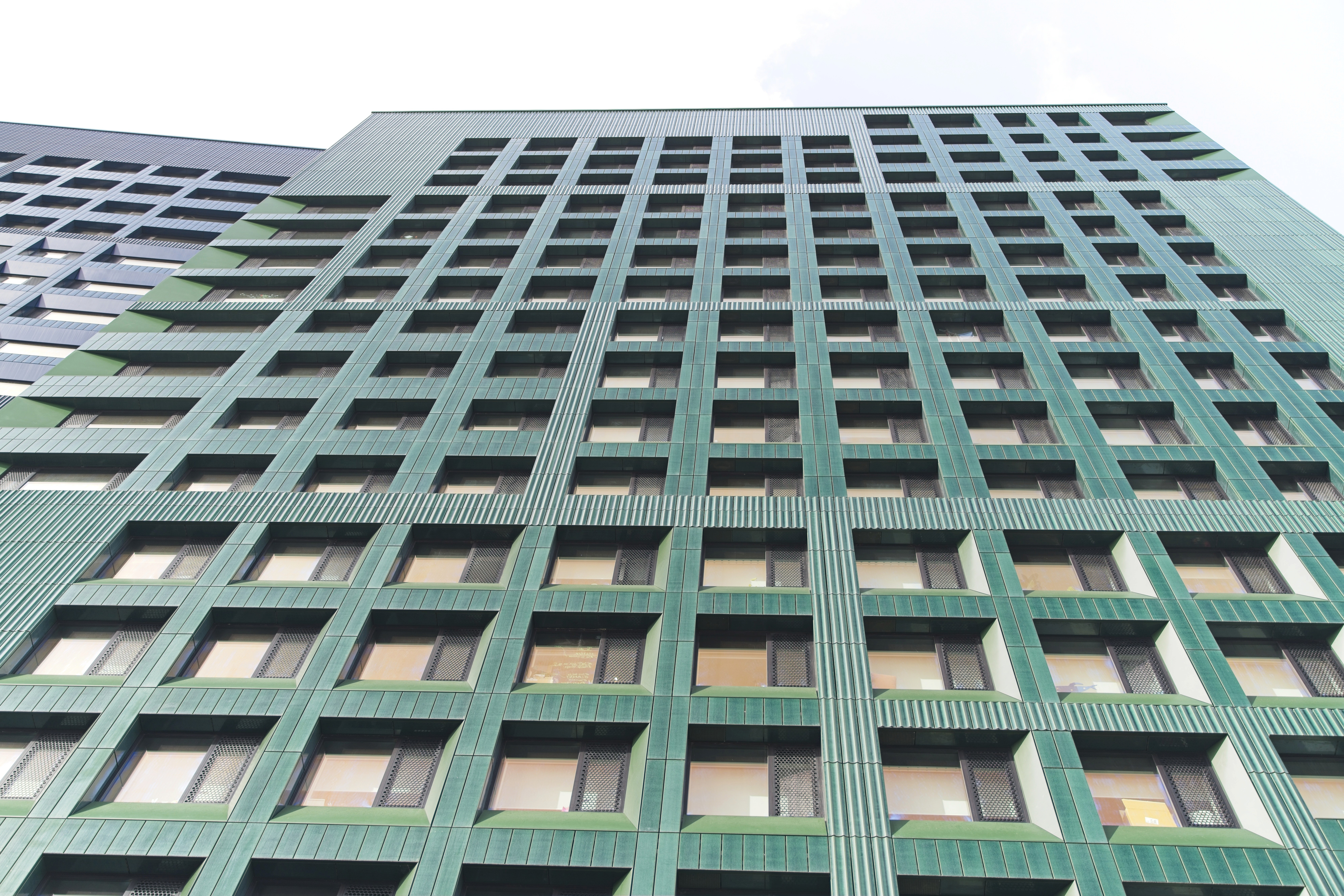
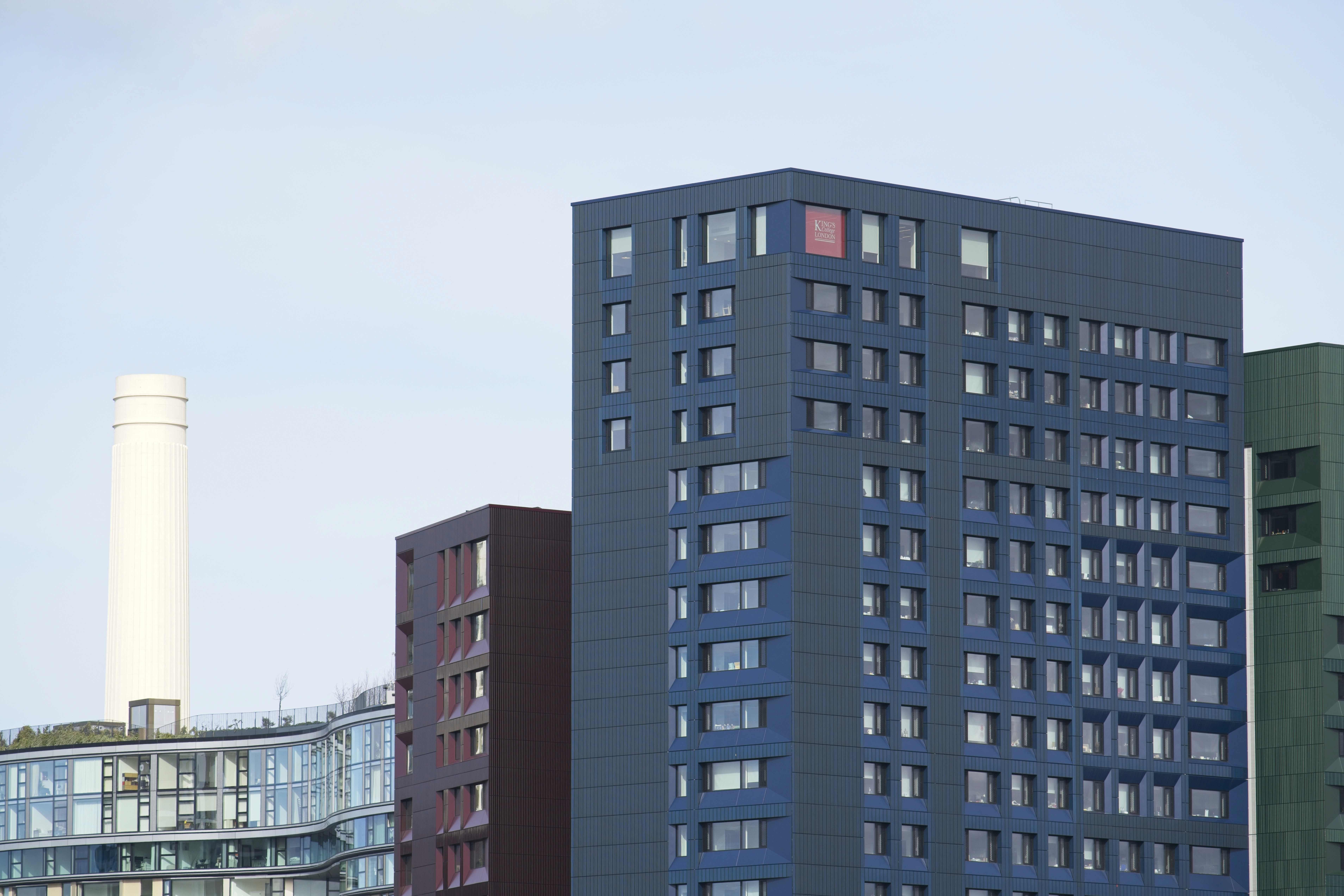
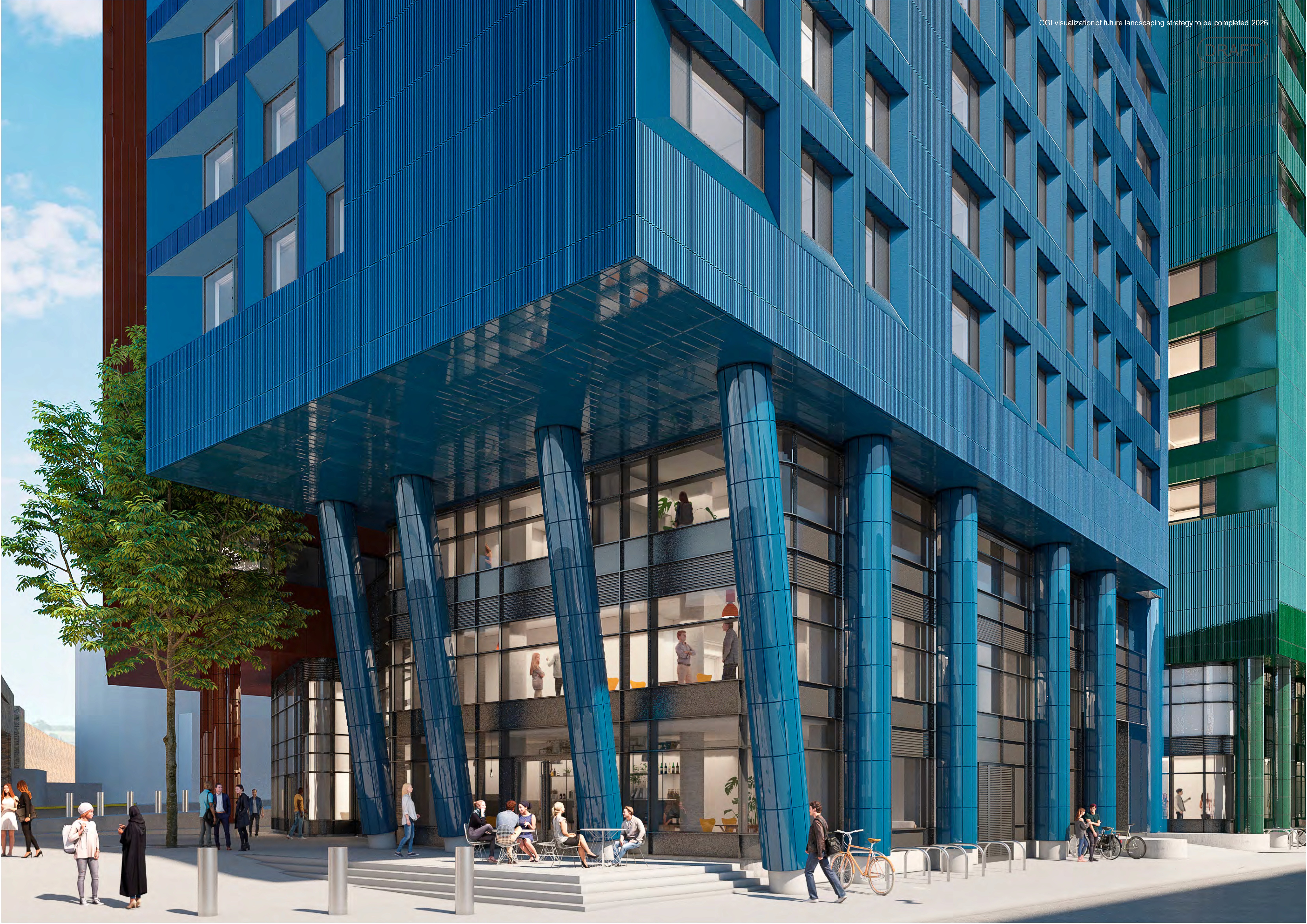
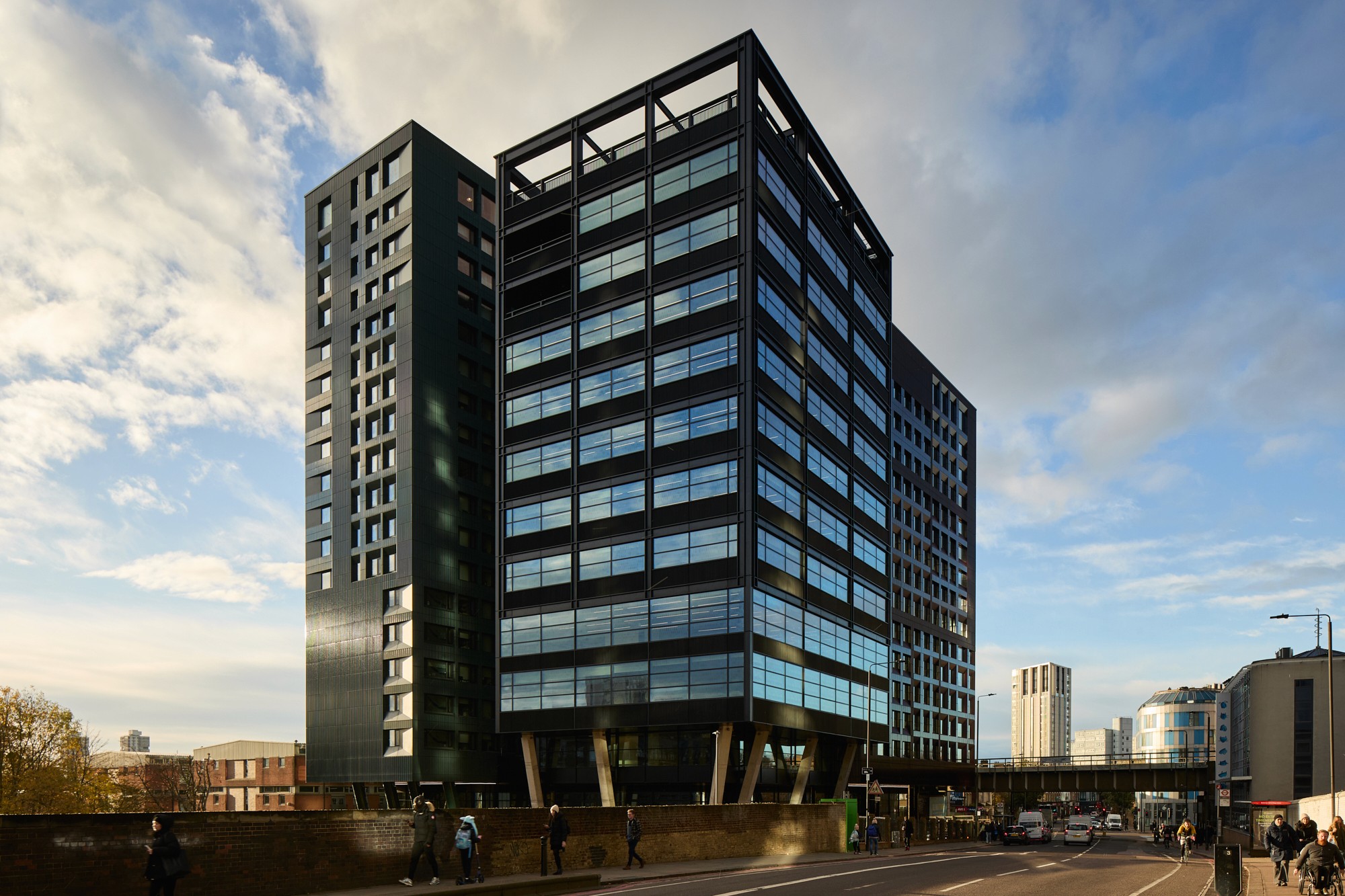
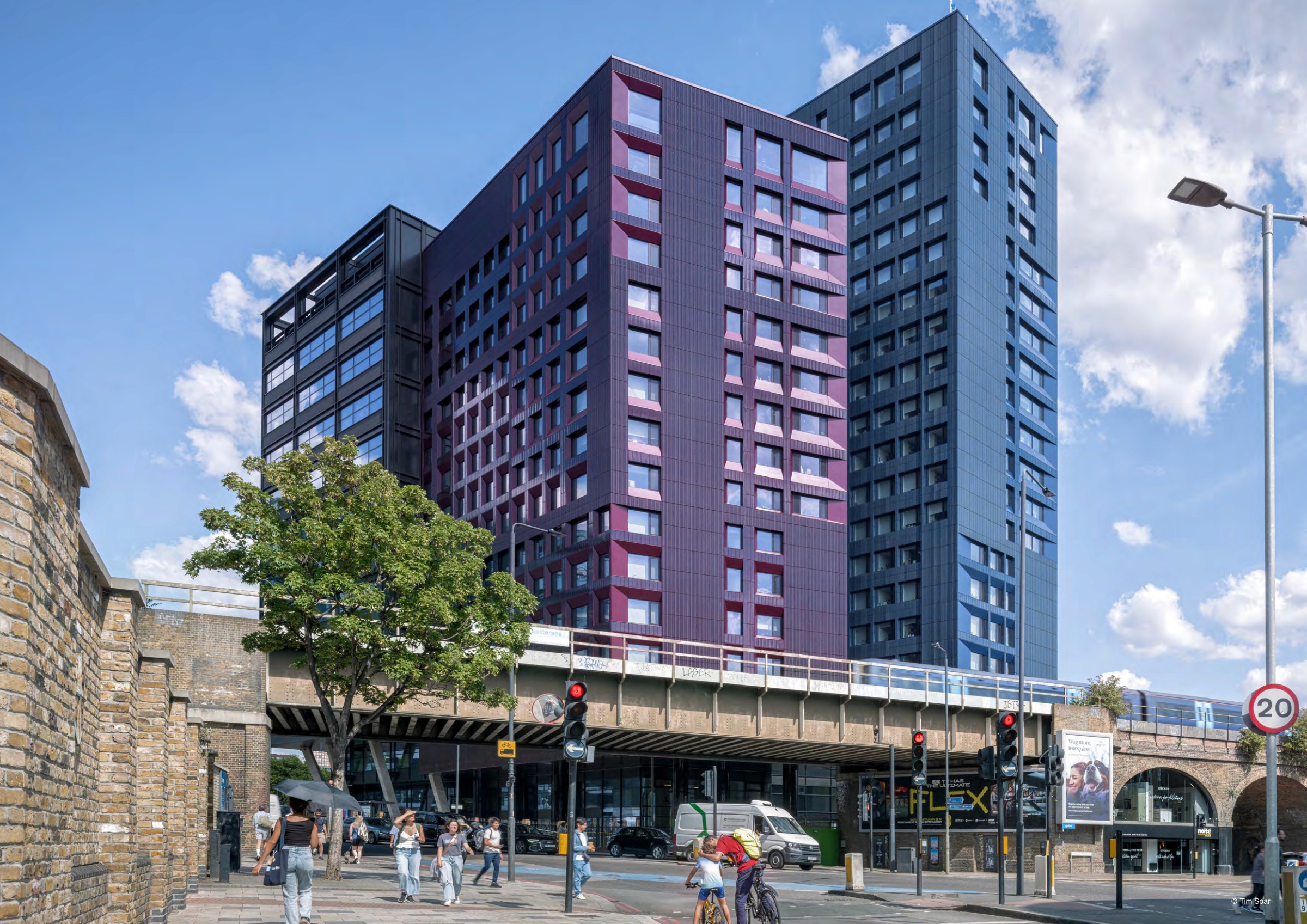
Stepping up from 11 to 19 storeys, the buildings are clad with glazed terracotta façades in red, green, and blue that reference the site’s industrial heritage. Opened last September, it features ensuite and studio accommodation, a cinema room, gym, and rooftop terraces with city views.
The low-energy design harnesses solar gain, internal heat sources, and mechanical ventilation with heat recovery to achieve substantial space heating and cooling energy savings compared to conventional buildings.
The building minimises thermal bridging and utilises high-performance pre-fabricated façade elements, as well as being rigorously tested for airtightness to ensure a comfortable indoor environment. The office building of the development also achieves BREEAM 2018 Outstanding.
Description:
urbanest Battersea is a large-scale Passivhaus student accommodation development located close to Battersea Power Station in London. Comprising four blocks and providing housing for 852 students, the project was recognised at completion as Europe’s largest Passivhaus student residence. The scheme was designed to demonstrate that Passivhaus principles can be successfully applied at high-rise scale, delivering meaningful reductions in operational energy demand while maintaining a high standard of comfort, build quality and architectural ambition.
The development rises from 11 to 19 storeys and combines student accommodation with ancillary uses and shared amenity spaces. Its glazed terracotta façades in red, green and blue respond to the site’s industrial context, while the massing and façade articulation were carefully developed to balance daylight, solar control and energy performance. Different façade typologies were used depending on orientation, with chamfered openings, glazing ratios and shading depth adjusted to manage overheating risk while preserving good daylight access and outward views. In the courtyard-facing elevations, larger windows and shallower façade build-ups were used to improve daylight penetration and create a stronger sense of openness.
From a Passivhaus perspective, the project required a highly coordinated response to the particular challenges of tall-building design. While the compact form of the buildings offered a favourable heat loss form factor, height introduced greater complexity around airtightness, thermal bridge control, façade penetrations and ventilation balance. These issues were addressed through detailed design development, close interdisciplinary coordination and a strong emphasis on quality assurance during construction. The building envelope combined high levels of insulation with prefabricated façade elements and carefully developed junction details to reduce thermal bridging and support airtightness continuity across a large and complex external skin.
A key part of the delivery strategy was the subdivision of the project into multiple thermal and airtightness zones, with separate PHPP models used to reflect the different uses and risk profiles across the scheme. This made it possible to manage the complexity of the development more accurately, coordinate certification requirements across different building areas and provide resilience in the event that one zone encountered difficulties during testing. The approach also required careful design of the interfaces between zones and a rigorous strategy for defining airtightness boundaries, both in plan and section.
Ventilation and servicing strategies were central to the project’s overall performance. Student rooms are served by centralised air handling systems with heat recovery, while local systems support spaces not connected to the main AHUs. The ventilation design was developed to maintain balanced airflows across a tall building where stack effect and wind pressure can significantly disrupt pressure neutrality. Alongside this, the scheme adopted an ambient loop system with roof-mounted air source heat pumps and floor-by-floor water-to-water heat pumps to provide domestic hot water, heating and cooling efficiently. This strategy reduced heat loss from distribution, supported heat recovery between spaces with different load profiles and contributed to lower operational energy demand.
Airtightness testing and construction quality control were especially important on a project of this scale. Interim testing, benchmark areas, zone testing and final whole-building testing formed part of a structured quality assurance process intended to identify weaknesses early and reduce certification risk. Although the final air permeability result exceeded the desired target, its impact on the overall modelled building performance was limited, and the development still achieved Passivhaus certification. The office element within the wider scheme also achieved BREEAM 2018 Outstanding.
Overall, urbanest Battersea shows how Passivhaus can be applied beyond low-rise housing and adapted to the technical, architectural and delivery realities of a major urban high-rise project. For me, it represents the value of combining building physics, façade strategy, servicing integration and construction-stage quality control into a coherent design approach capable of delivering both environmental performance and long-term operational value.