Passivhaus in high-rise buidings
Benefits of tall buildings
A taller building offers a favourable form factor, but scaling up amplifies challenges with airtightness, thermal bridge control, ventilation, etc. Overcoming these requires meticulous planning, innovative design, skilled labour, and unwavering commitment to quality.
Form Factor Efficiency
High-rise buildings often have a more efficient external surface area to treated internal floor area ratio, requiring less insulation to meet Passivhaus standards. However, as the building scales up, careful design and execution on the following areas are needed to maintain this efficiency.
Thermal Bridging
High-rise buildings involve complex structural elements like terraces, columns, and cantilevers, which can create thermal bridges - areas where heat can escape. Balancing the significant structural requirements while designing out thermal bridging in the façade zone is a significant challenge.
Airtightness
Achieving the airtightness required by Passivhaus standards is difficult in high-rises because of the sheer number of joints, windows, doors, and penetrations by mechanical systems. Small gaps or construction errors can accumulate to significantly impact the building’s energy performance.
Mechanical Ventilation
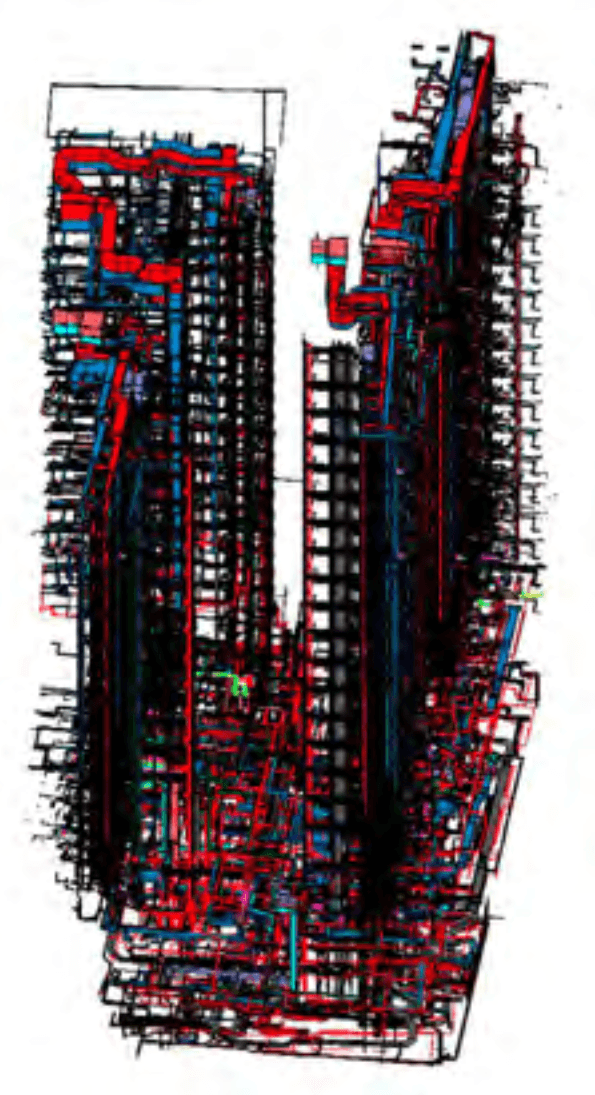
Passivhaus buildings rely on mechanical ventilation with heat recovery (MVHR) systems to supply fresh air while minimising energy loss. Designing and implementing an effective MVHR system in a high-rise is complex due to the vertical distribution of air, pressure differences, and ensuring airtightness and high performance insulation around all the façade penetrations.
Window Design and Solar Shading
High-rise buildings can be more exposed to solar gain, which requires thoughtful design to avoid unwanted overheating. This involves optimising window placement, size, and shading devices, which is more complex when dealing with the varying orientations and exposures of a high-rise.
Energy Modelling and Simulation
Accurately modelling energy performance in high-rises to meet Passivhaus standards is complex, requiring advanced tools to account for scale, pressure variation, and system interactions.
Material Selection and Procurement
Procuring specialised materials at scale, such as high-performing windows and airtight membranes, is challenging due to longer lead times, higher costs, and the need for reliable suppliers. Ensuring that all components meet Passivhaus standards while maintaining the construction schedule requires careful coordination with the supply chains.
Construction Quality Control
Ensuring that the high standards of workmanship required for Passivhaus certification are maintained throughout the construction process is more difficult in a high-rise due to the scale and number of workers involved. Any lapse in quality can compromise the building’s performance.
Airtightness
Why is it important?
Airtightness is essential in Passivhaus buildings because it reduces heat loss, improves comfort, and protects the building fabric. A well-sealed envelope limits uncontrolled infiltration, lowering the energy needed to reach and maintain a comfortable internal environment. As shown below, poor airtightness can significantly increase heat losses through ventilation and infiltration, undermining the benefits of high-performance fabric.
urbanest Battersea has an internal volume of 53,976 m³ and an envelope area of 18,480 m². Larger buildings often meet the ≤ 0.6 ACH @ 50 Pa Passivhaus target more easily due to their favourable surface-to-volume ratio, but they can still experience localised draughts. Air permeability testing therefore remains an important check on construction quality, helping to identify weaknesses in the airtightness layer before completion.
The Requirement
Airtightness and air permeability are assessed using a Blower Door test, which pressurises and depressurises the building to 50 Pa. To achieve Passivhaus certification, urbanest Battersea must meet two performance thresholds:
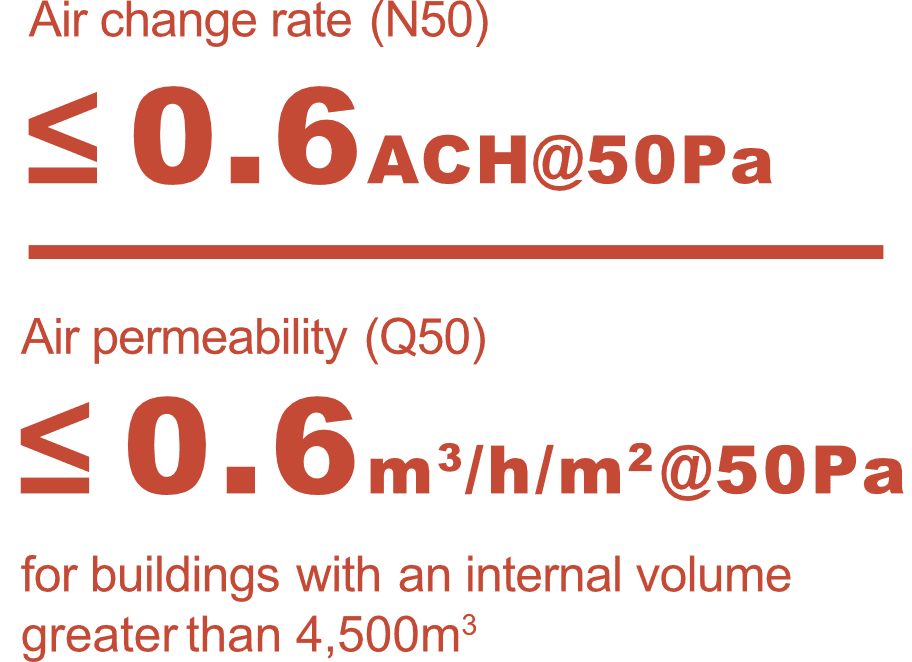
Understanding the difference between these metrics is essential.
Air Change Rate (ACH): A Passivhaus metric calculated by dividing the measured airflow (m³/h) by the building’s internal volume (m³). It indicates how much air is unintentionally exchanged with the outside and directly relates to heat loss.
Air Permeability (m³/h/m²): Calculated by dividing the measured airflow (m³/h) by the envelope area (m²). It is widely used in UK construction as an indicator of build quality and airtightness integrity.
These metrics are not interchangeable; their relationship depends on the building’s surface-to-volume ratio, meaning form and scale strongly influence results. In a building the size of urbanest Battersea, the 0.6 m³/h/m² air permeability target corresponds to roughly 0.23 ACH.
The Strategy
A clear, continuous airtightness line must be established from the outset in both plan and section, along with the sealing products and construction processes needed to achieve the target performance. As described in the previous chapter, the building was divided into six airtightness zones, with boundary conditions defined through a coordinated set of drawings.
Developing these boundaries required careful attention to detailing, specification, and sequencing by both the design team and contractors.