The 5 principles of Passivhaus
What is Passive House (in really simple terms)?
What if a building could use up to 90% less energy than a conventional one, cost far less to heat and cool, and still feel more comfortable to live in every day? What if it could maintain stable indoor temperatures through winter and summer, improve air quality, and create a healthier living environment at the same time?
building where you might only spend a few hundred pounds a year on heating and cooling, and where even if it is -20°C outside, you could still be comfortable indoors in shorts and slippers. That is the idea behind Passive House.
That is the promise of Passivhaus. It is a performance-based building standard that brings together very low energy demand, high levels of comfort, and better indoor environmental quality. At its core, Passivhaus is not about one product or one technology. It is a design approach built around a set of principles that work together to reduce heat loss, improve efficiency, and create buildings that perform reliably in use.
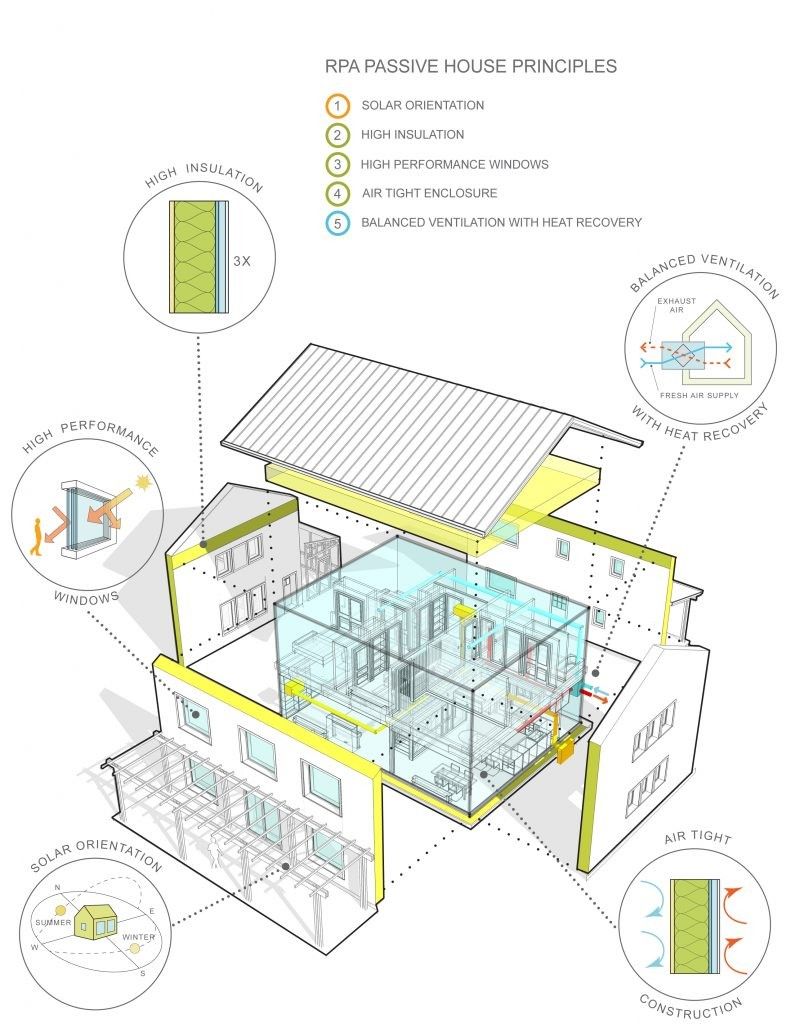
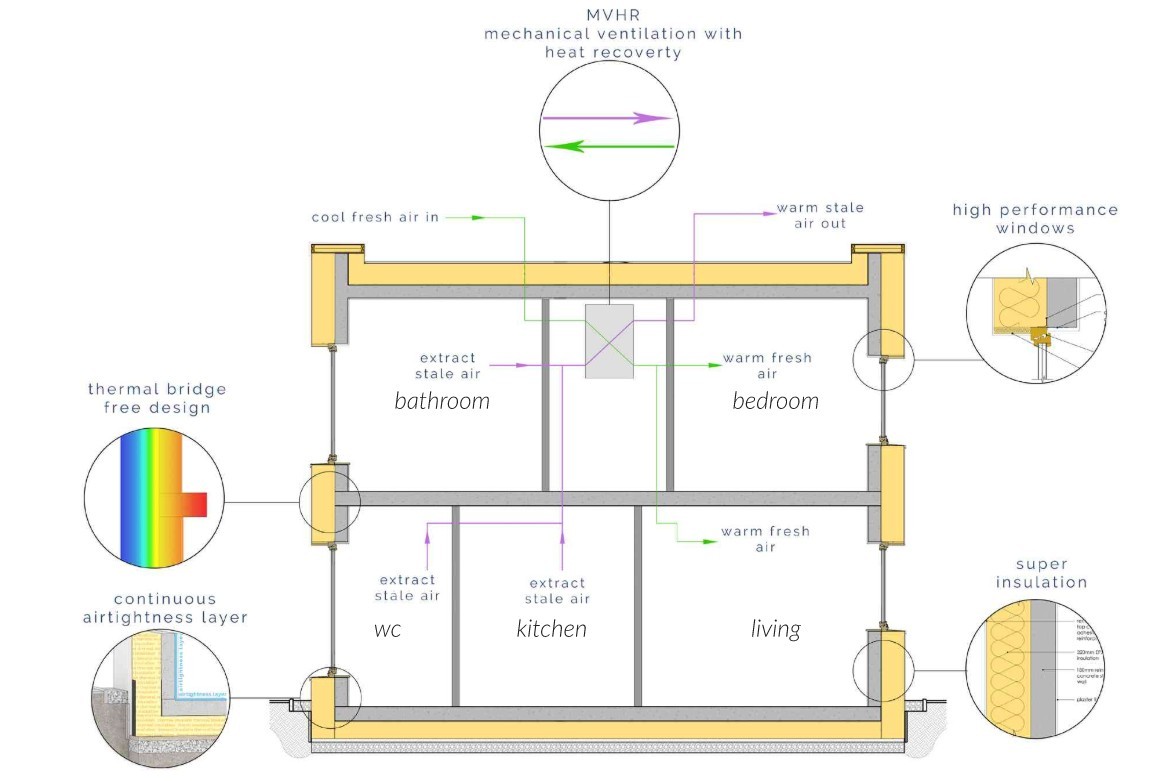
The standard is based on five key principles. When they are applied together, they create buildings that are comfortable, healthy, durable, and significantly more energy efficient than standard construction.
1. Continuous Insulation
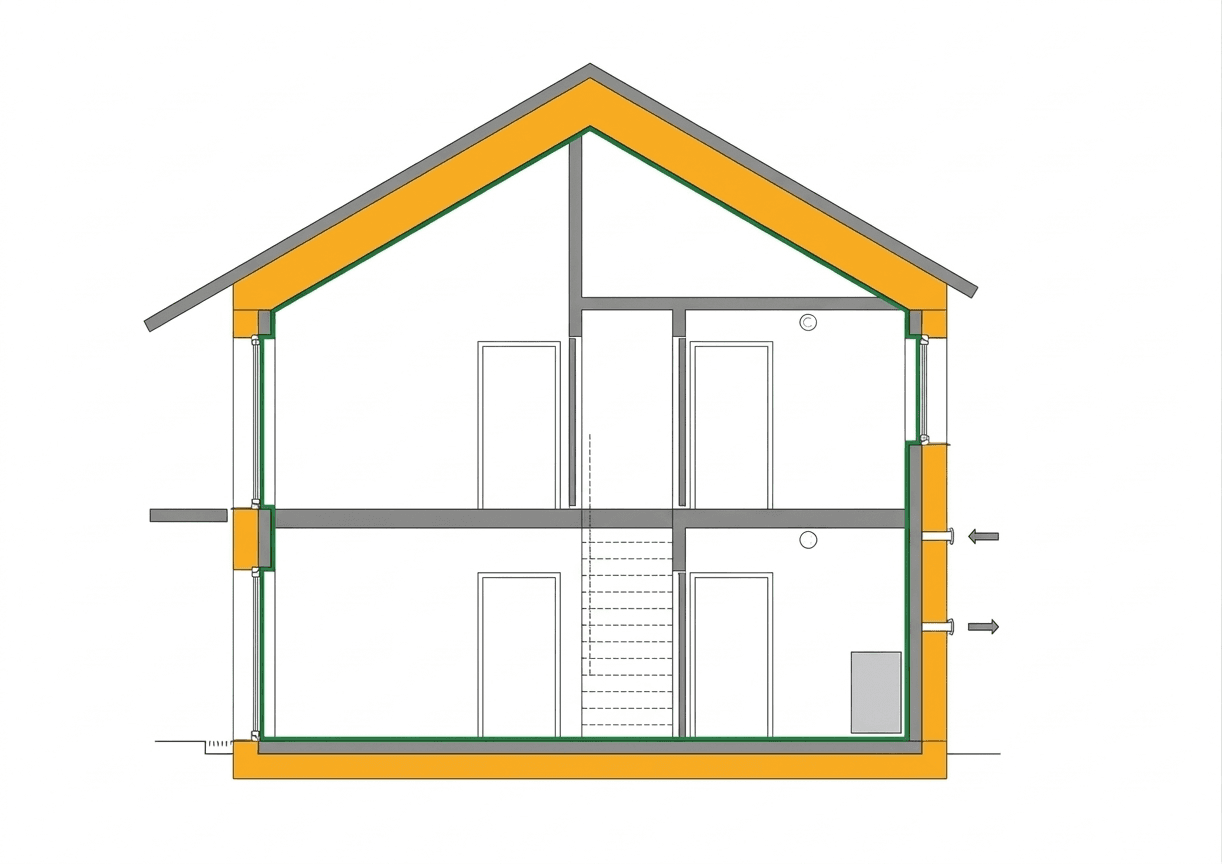
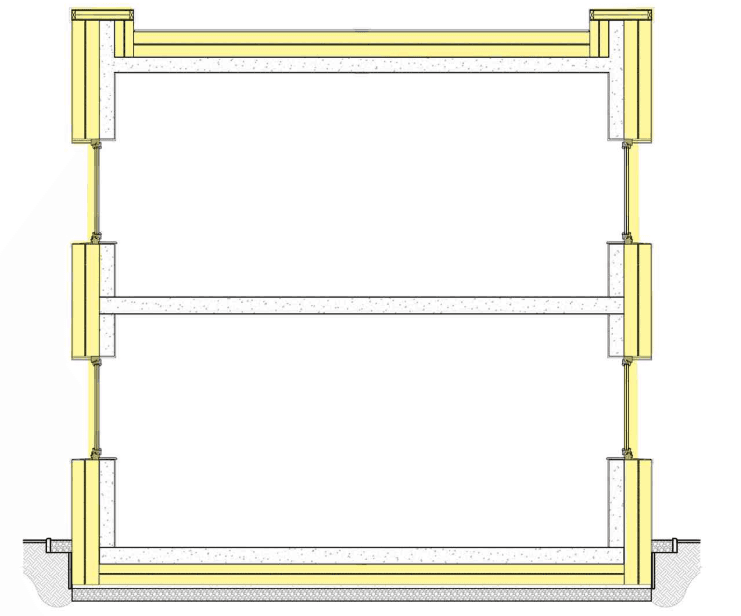
The first principle is continuous insulation. That layer of insulation reduces heat loss through the walls, roof, and floor, helping the building retain warmth in winter and resist overheating in summer.
The simplest way to understand this is to think of the building as being wrapped in a warm blanket.
Continuous insulation also improves comfort by raising internal surface temperatures. In practical terms, that means walls, floors, and ceilings feel more stable and comfortable, rather than cold and uneven. This reduces the amount of energy needed to maintain a consistent indoor temperature and forms the foundation of a high-performance thermal envelope.
2. Thermal Bridge-Free Design
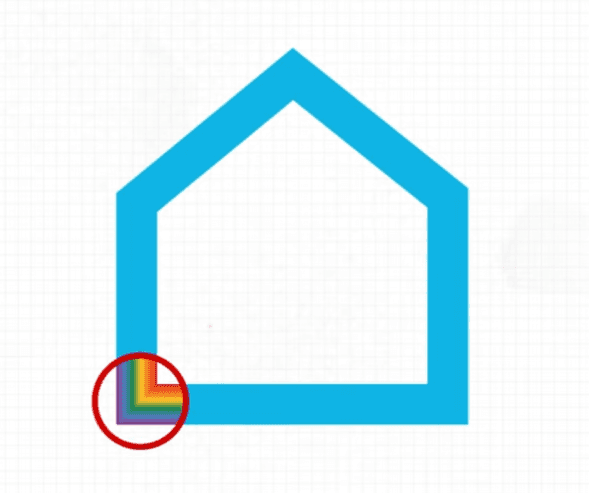
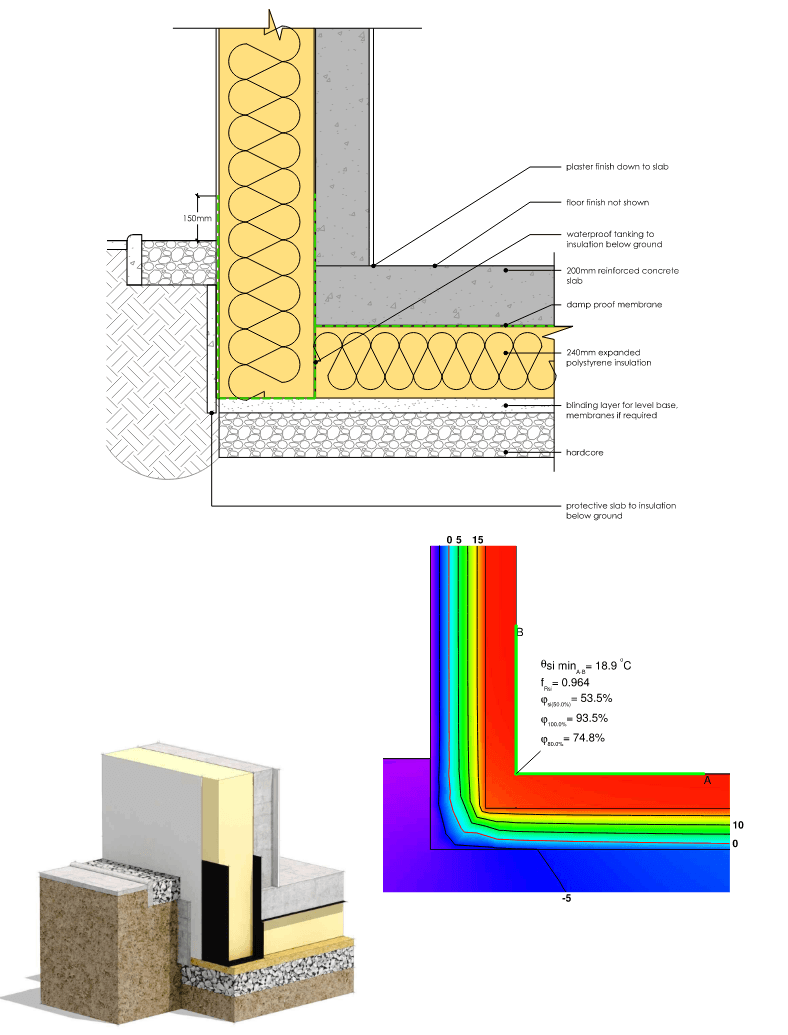
The second principle is thermal bridge-free design. Thermal bridges are localised weak spots in the building envelope where heat can escape more easily than through the surrounding construction. These often occur at junctions, penetrations, balconies, slab edges, window interfaces, and other areas where geometry or materials interrupt the insulation layer.
Consider it like going skiing in a full ski suit but forgetting to wear gloves. Your body may be protected overall, but your hands will still get cold because one part has been left exposed. These cold hands will also make the rest of our body cold.
Buildings behave in the same way. Some details may be less insulated than others, or not insulated at all, and these become the thermal bridges that need to be carefully designed and improved
If these details are not carefully resolved, they can undermine the performance of the whole building. They also increase the risk of cold internal surfaces, which can lead to condensation and mould.
Passivhaus design aims to eliminate thermal bridges wherever possible, and where they cannot be removed completely, their impact must be carefully quantified and minimised. This principle is essential not only for reducing heat loss, but also for protecting comfort, durability, and indoor environmental quality.
3. High-Performance Windows
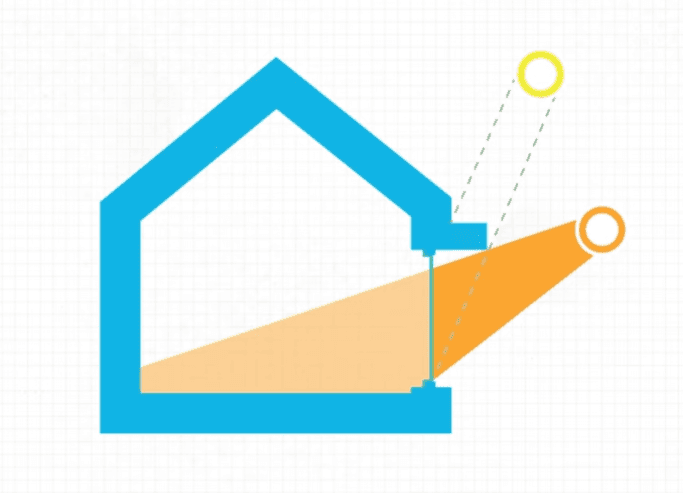
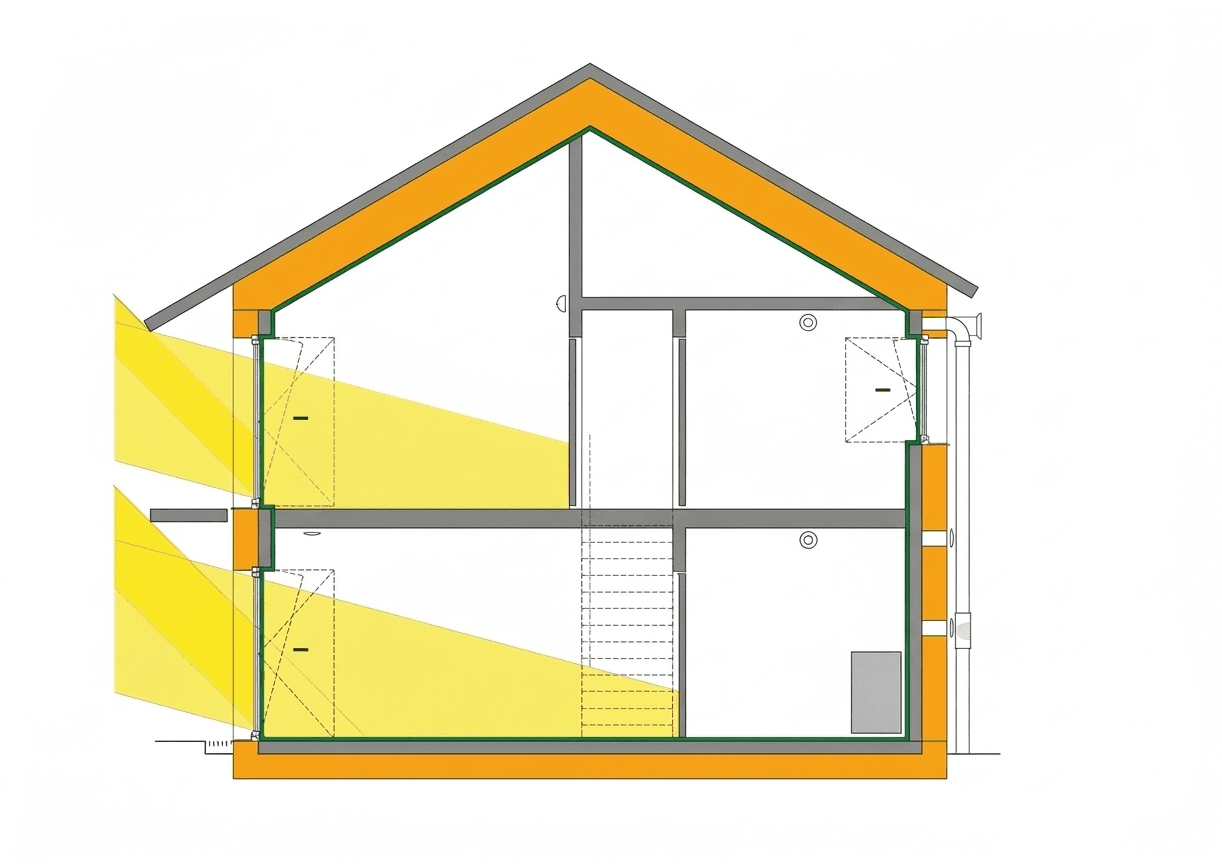
The third principle is high-performance windows. Windows are the most transparent part of the building envelope, but they are also one of the most technically important. In Passivhaus design, windows need to do more than simply admit light and provide views. They must also help control heat loss and make effective use of solar gains.
Think of the windows are like a good pair of sunglasses that protect you from glare and harmful UV rays while still letting you see clearly. These glasses also have nicely insulated frames, that don't get cold and therefore feel cold against your face.
This is why Passivhaus typically relies on very high-performing window systems, often triple glazed, with carefully designed frames and installation details. These windows reduce heat loss compared with conventional glazing, while still allowing useful solar energy from the sun into the building when conditions are favourable.
Good window design also contributes significantly to comfort. It reduces cold downdraughts, improves surface temperatures near the glass, and allows spaces near windows to feel usable and pleasant throughout the year. When combined with insulation and careful thermal bridge control, high-performance glazing becomes a key part of the overall envelope strategy.
4. Airtight Construction
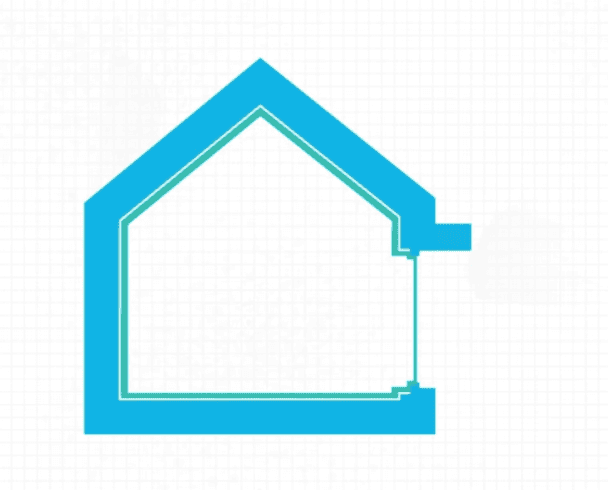
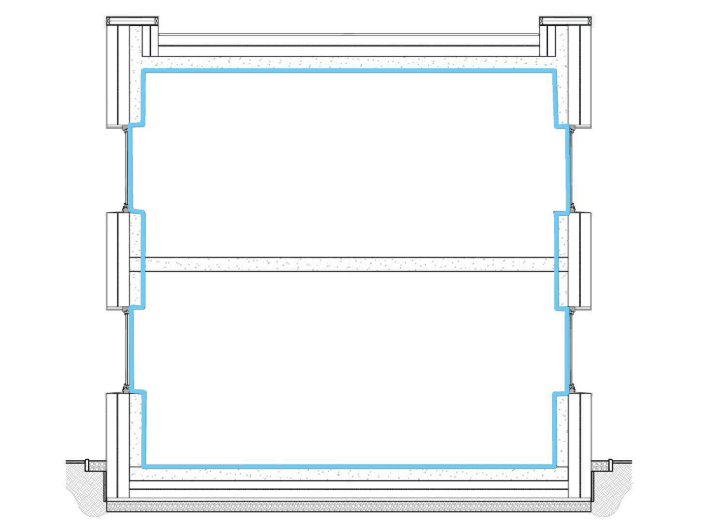
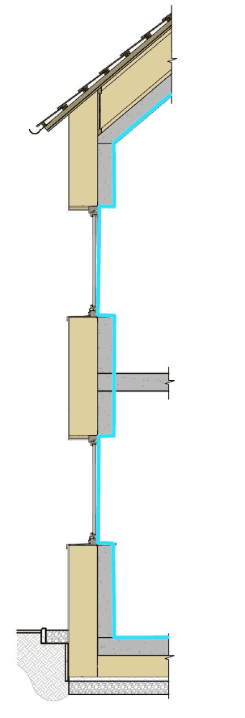
The fourth principle is airtightness. A building can be very well insulated, but if air is allowed to leak through gaps, cracks, and poorly sealed junctions, heat will still be lost and performance will suffer.
Airtightness can be like comparing it to wearing a sweater outdoors on a cold day. If the sweater has lots of holes in it, you will get cold as your body warmth escapes through the holes. If the weather is still, the sweater may keep you warm enough. But if it is windy, cold air will pass through it and you will feel cold anyway.
Airtightness means creating a continuous, durable layer that prevents uncontrolled air leakage through the building envelope. This is important because unwanted air movement increases heating demand, reduces comfort, and can carry moisture into the construction, where it may cause long-term damage.
In Passivhaus, airtightness is not treated as an afterthought. It is designed from the outset and carried through into construction with careful detailing, coordination, and testing. Every junction, penetration, and interface matters. When done properly, airtightness helps the building retain heat, improves internal comfort, and supports the long-term integrity of the fabric.
5. Mechanical Ventilation with Heat Recovery
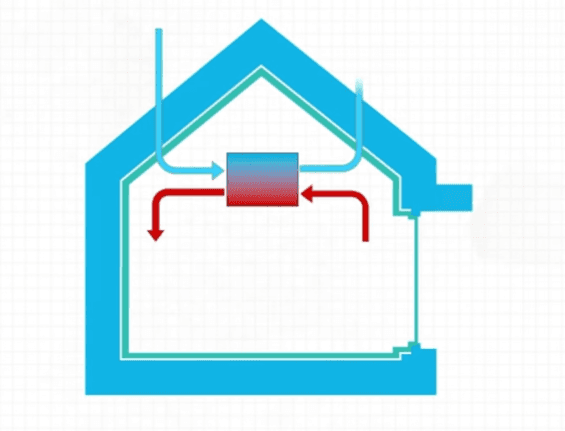
The fifth principle is mechanical ventilation with heat recovery, often referred to as MVHR. Because a Passivhaus building is so airtight, it does not get fresh air passively through leaky walls, roofs, windows, and other gaps in the fabric. In a Passive House, this uncontrolled route is removed, so fresh air must be supplied in a deliberate and efficient way. It needs a controlled and reliable way to supply fresh air and remove stale air.
Think of it like breathing out into a scarf, your warm breath heats the fabric. Then, when you breathe in again, the cold outside air passes through that slightly warmed fabric, so the air you inhale feels less cold. You are not creating new heat - you are recovering some of the heat that would otherwise be lost from your exhaled warm breath.
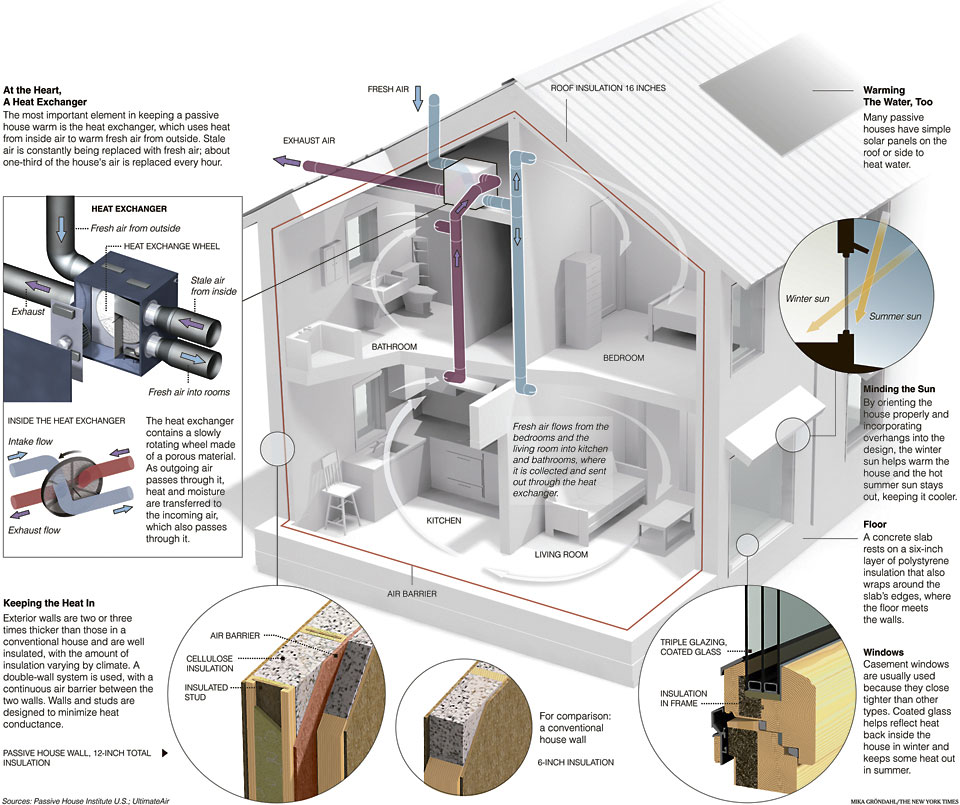
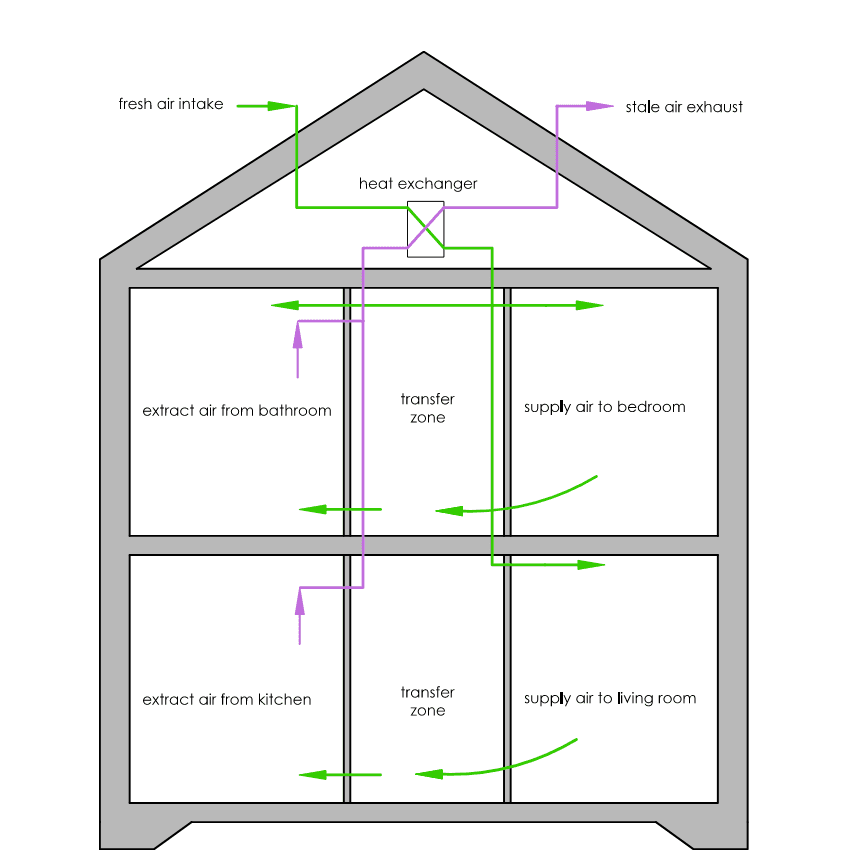
If you relied on a more basic ventilation approach, you would constantly need to heat up all the incoming outside air. A heat recovery ventilation system solves this by capturing around 90% of the heat from outgoing stale air and using it to warm the incoming fresh air. This reduces heat loss through ventilation while still maintaining good indoor air quality.
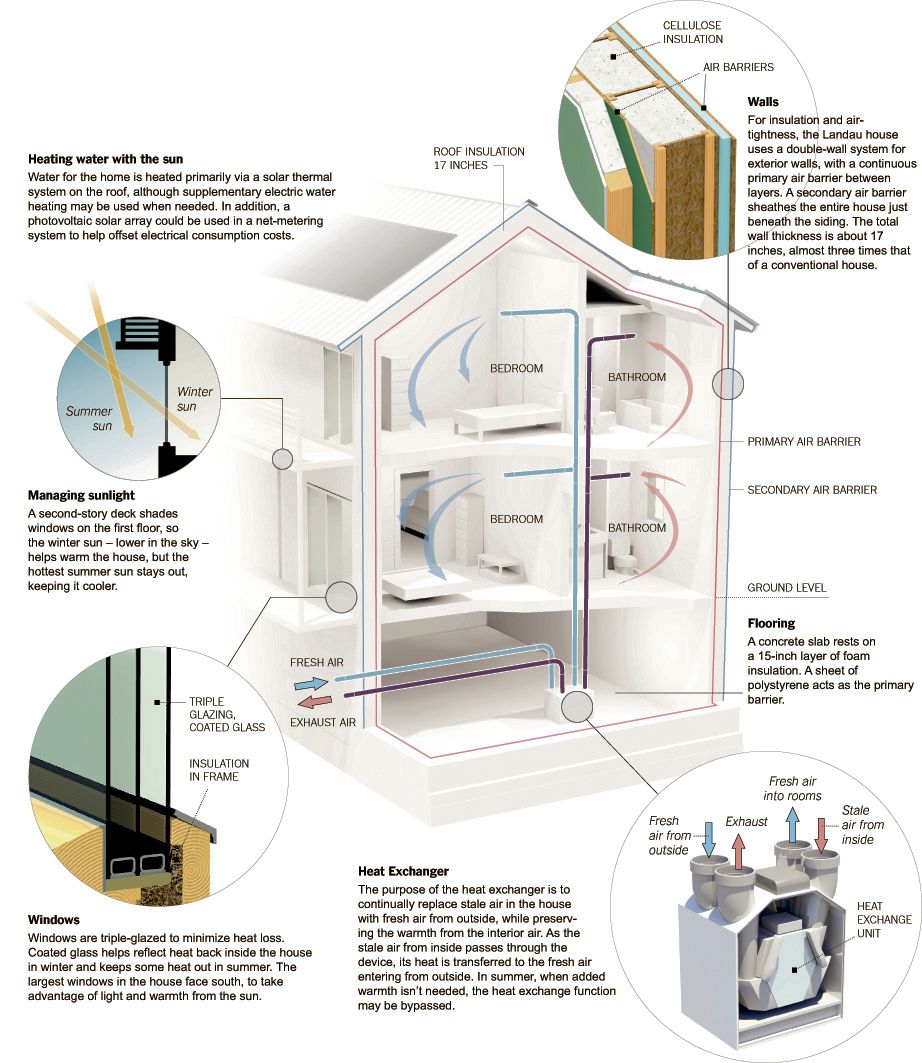
An MVHR system does exactly that. It continuously brings fresh air into the building while extracting used air from kitchens, bathrooms, and other service areas. Crucially, it recovers heat from the outgoing air and transfers that heat to the incoming air. This allows the building to maintain good indoor air quality without losing most of the warmth that has already been paid for.
This is one of the reasons Passivhaus buildings can feel both fresh and comfortable at the same time. The ventilation system supports healthy indoor conditions, helps control humidity, and filters the incoming air, reducing pollen, dust, and other pollutants. In doing so, it improves both energy performance and occupant wellbeing.
Passivhaus as the Basis for Sustainable Building
Passivhaus is also a powerful foundation for wider sustainability. The first step towards a low-carbon building is always to reduce energy demand as far as possible. Once that demand is dramatically lowered, the remaining energy use becomes much easier to meet through renewable generation such as rooftop photovoltaics.
This is why Passivhaus is so relevant to the future of the built environment. It addresses operational energy at source, improves comfort and health for occupants, and creates a robust platform for genuinely sustainable design. Rather than relying on energy generation alone, it starts by making buildings need far less energy in the first place.
Benefits of Passivhaus
Exceptional Energy Efficiency
One of the most significant advantages of Passivhaus design is its exceptional energy efficiency. While the average UK home uses around 140 kWh per m2 of floor area per year for space heating, certified Passivhaus dwellings ensure a maximum of 15 kWh/m2/yr, representing almost a 90% energy saving compared to conventional structures.
Carbon Emission Reduction
Space heating accounts for roughly 17% of the total UK carbon emissions. Passivhaus aims to drastically reduce space heating demand, aligning with the UK’s targets of reaching net zero by 2050 and accelerating decarbonisation. In some cases Passivhaus design can even be completely net zero, requiring no external fuel to heat the dwelling.
Comfort Standard
Passivhaus design has been referred to as ‘the comfort standard.’ Prioritising occupant comfort through heightened levels of thermal comfort and superior indoor air quality helps mitigate health conditions stemming from inadequate air quality and cold or damp homes. Instances of health conditions such as asthma have been considerably improved when transitioning to Passivhaus.
Initial Costs vs. Long-term Savings
A common concern associated with Passivhaus is the initial construction cost, which can be higher than conventional building methods due to the use of more specialised materials and increased thermal insulation requirements. However, the long-term savings on energy bills often outweigh the initial investment.
Social Housing Solution
Passivhaus holds promise as a solution in the social housing sector, particularly in addressing fuel poverty. By significantly reducing residents’ utility bills, Passivhaus can alleviate scenarios where individuals with lower incomes face the challenging decision of whether to heat their homes or not.
Why the Five Principles Must Work Together
The real strength of Passivhaus lies in the fact that these five principles are not separate add-ons. They are designed to work together as one integrated system. Insulation without airtightness will not perform as intended. Airtightness without ventilation would compromise indoor air quality. Good windows without thermal bridge control would still leave weak points in the envelope.
It is this joined-up approach that allows Passivhaus to deliver such strong results. The standard is not based on a single product or piece of equipment, but on the careful coordination of fabric, detailing, glazing, and ventilation to create a building that performs consistently in real life.
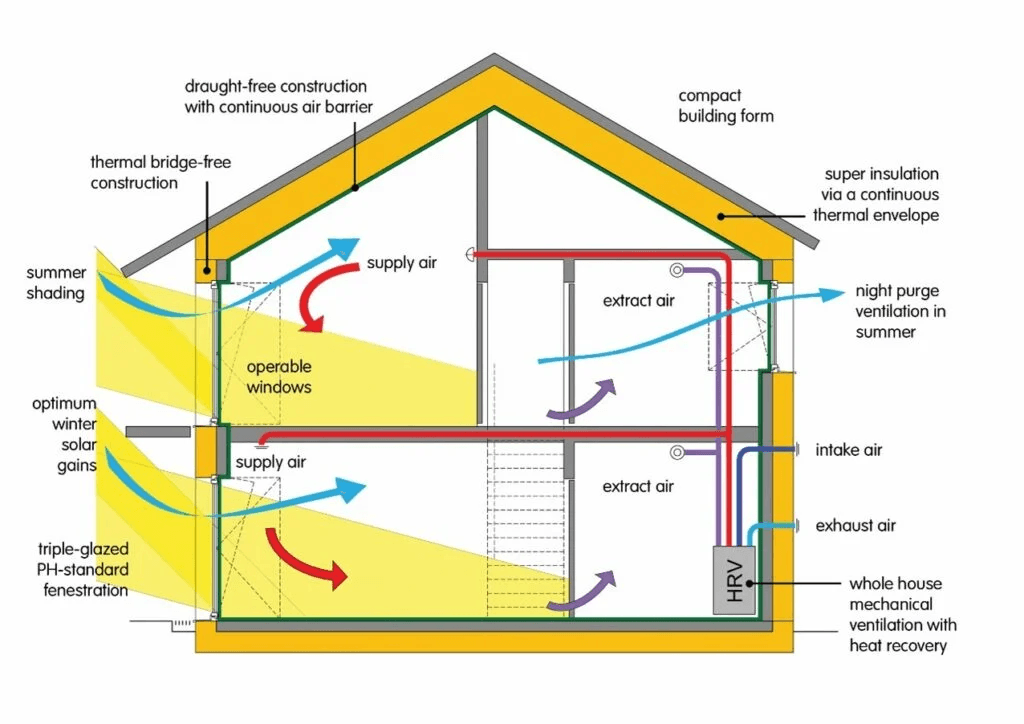
Useful diagrams showing all Passivhaus principles together: